
You just got a text or email mentioning “VTO” for your next shift, and now you’re stuck wondering if this is good news or bad news for your paycheck. Most employees find out the hard way, after they’ve already agreed to something they didn’t fully understand.
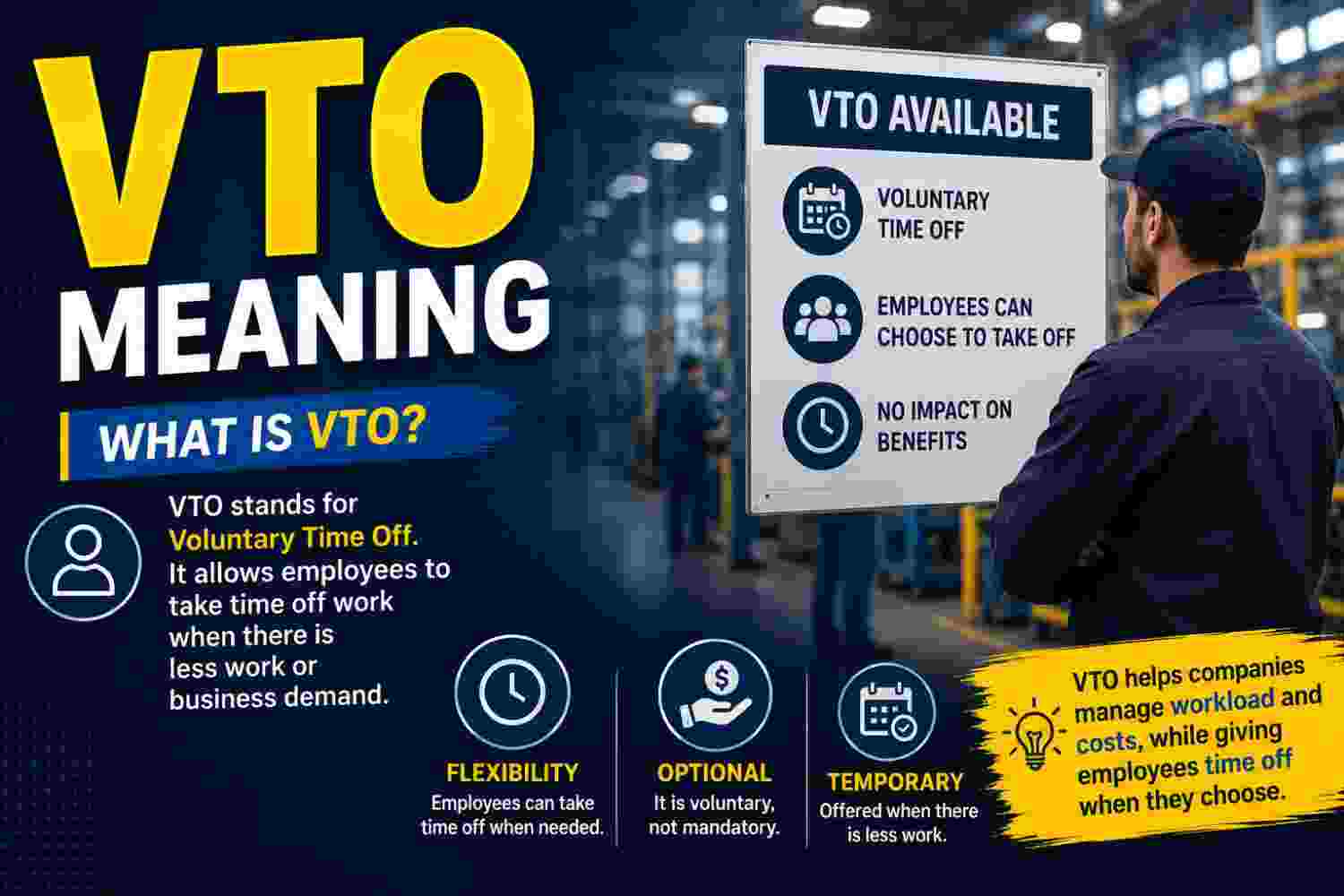
Here’s the quick answer: VTO stands for Voluntary Time Off, a workplace program where employees can choose to leave work early or skip a shift entirely, usually without pay, often during slow business periods. But the VTO meaning goes much deeper than that one-line definition once you factor in company policy, pay structure, and your own financial situation.
By the end of this guide, you’ll understand exactly what VTO means, how it differs from other leave types, and whether accepting VTO actually benefits you or quietly hurts your bank account.
What Does VTO Actually Stand For?
VTO stands for Voluntary Time Off, a scheduling tool many companies use when they have more staff on hand than the workload requires. Warehouses, call centers, and retail chains use VTO constantly, especially during slower seasons.
The word “voluntary” is the key part of the VTO meaning that trips people up. Nobody can force you to take VTO, though some workplaces apply subtle pressure when the schedule feels overstaffed.
Breaking Down the Term Piece by Piece
Understanding the VTO meaning gets easier once you split the phrase into its three core parts.
- Voluntary — You choose whether to accept it, not your manager
- Time — Refers to scheduled work hours you’d normally be clocked in for
- Off — Time away from the job, typically unpaid unless stated otherwise
This combination makes VTO fundamentally different from sick leave or vacation days, which are usually paid and pre-approved through HR systems.
Common Industries Where VTO Shows Up
The VTO meaning stays consistent across industries, but how often it’s offered varies a lot depending on the business model.
- Warehousing and logistics — Amazon and similar companies use VTO heavily during low-demand weeks
- Call centers — Offered when call volume drops unexpectedly
- Retail stores — Common after major holiday rushes end
- Manufacturing plants — Used when production quotas are already met early
If your employer operates in one of these sectors, you’ve probably already seen a VTO offer pop up on your work app or bulletin board.
VTO vs Other Types of Leave
People often confuse VTO with sick days, PTO, or unpaid leave, but each one works completely differently once you look closely.
How VTO Differs From PTO
PTO, or Paid Time Off, is something you request and typically get paid for. VTO flips that entirely, since it’s employer-initiated and usually comes without pay.
| Leave Type | Who Initiates It | Paid? | Employee Choice |
|---|---|---|---|
| VTO (Voluntary Time Off) | Employer offers, employee accepts | Usually No | Yes, fully optional |
| PTO (Paid Time Off) | Employee requests | Yes | Yes |
| Sick Leave | Employee requests | Often Yes | Situational |
| Mandatory Time Off | Employer decides | Varies | No |
Quick human analysis: The table makes the VTO meaning clearer than any paragraph could. Notice how VTO sits in a strange middle zone — it’s optional like PTO, but unpaid like mandatory time off, which is exactly why so many workers feel torn when the offer lands in their inbox.
Why Some Companies Offer VTO Constantly
Businesses lean on VTO because it protects their labor budget without resorting to layoffs. When customer demand dips, offering VTO trims payroll costs immediately.
- Reduces overtime and labor expenses during slow periods
- Avoids the legal and morale complications of layoffs
- Keeps staff available and ready once demand picks back up again
- Builds goodwill by letting employees choose instead of forcing cuts
Should You Accept VTO When It’s Offered?
This is the real question behind every VTO search, and the honest answer depends entirely on your personal finances and schedule flexibility.
When Taking VTO Makes Sense
Some situations make accepting a VTO offer an easy, stress-free decision.
- You already have enough hours banked for the pay period
- You’ve got personal errands, appointments, or family time waiting
- Your job offers point-based attendance systems where VTO won’t count against you
- You’re financially stable enough to absorb a few unpaid hours
Workers who treat VTO as a scheduling bonus, rather than a financial risk, usually walk away satisfied with the trade-off.
When You Should Skip VTO Instead
Other times, saying no to VTO protects you from real financial strain, even if a manager seems to expect a yes.
- You’re living paycheck to paycheck and need every scheduled hour
- Your household bills are tightly budgeted around your usual shift hours
- You’ve already used other unpaid time off recently
- Overtime pay was expected that week and VTO would erase it
Nobody should feel guilty declining VTO, since the entire point of the program is genuine employee choice, not obligation disguised as a favor.
The Financial Impact Nobody Talks About
The VTO meaning sounds harmless on paper, but the financial ripple effect deserves honest attention before you say yes repeatedly.
Real Numbers Behind Frequent VTO Acceptance
| Scenario | Weekly Hours Lost | Estimated Monthly Pay Impact |
|---|---|---|
| Occasional VTO (1x/month) | 4 hours | -$60 to -$100 |
| Regular VTO (1x/week) | 4 hours weekly | -$240 to -$400 |
| Frequent VTO (2x/week) | 8 hours weekly | -$480 to -$800 |
Human analysis: These numbers assume a standard $15–$20 hourly wage, and the gap widens fast for higher earners. Workers who accept VTO out of habit, rather than genuine need, often don’t realize how much it quietly chips away at their annual income until tax season arrives.
Frequently Asked Questions
What does VTO mean at work?
VTO means Voluntary Time Off, a program where employees can choose to leave a shift early or skip it entirely, typically without pay, usually offered during periods of low business demand.
Is VTO the same as being laid off?
No, VTO is temporary and fully optional, while a layoff is a permanent, involuntary end to employment. Accepting VTO doesn’t affect your job status or future scheduled shifts.
Can my employer force me to take VTO?
No, true VTO must remain voluntary by definition. If a manager pressures you into accepting it against your will, that crosses into mandatory time off territory and may violate company policy.
Does VTO affect unemployment benefits?
In most states, occasional VTO doesn’t qualify you for unemployment benefits since you technically remain employed. Rules vary by state, so checking your local labor office is worth the extra five minutes.
Will declining VTO hurt my job standing?
Declining a genuine VTO offer shouldn’t impact your standing, since acceptance is meant to be optional. If declining consistently causes problems, that’s a red flag worth raising with HR.
Is VTO taxed differently than regular pay?
VTO itself isn’t pay at all since it’s unpaid time, so there’s nothing to tax during that period. Your remaining worked hours get taxed normally through your usual payroll process.
Can I get VTO and still keep full-time benefits?
Yes, occasional VTO usually doesn’t affect full-time benefit eligibility, though frequent acceptance that drops your total hours below a certain threshold could impact benefits at some companies.
Final Verdict on VTO Meaning
VTO means far more than a quick text offering you a few hours off. It represents a genuine choice between short-term freedom and short-term income, and only you can weigh which one matters more during any given week.
Treat every VTO offer as a personal financial decision, not a company favor you’re expected to accept. Check your bank account, check your schedule, and only say yes when the trade genuinely works in your favor.