
You keep seeing “AOP” thrown around in meetings, emails, and reports, and nobody bothers to explain it. You nod along, but inside you’re wondering what AOP actually stands for and why your entire department seems to revolve around it every January.
Here’s the direct answer: AOP stands for Annual Operating Plan, a structured financial and strategic roadmap companies build each year to set goals, allocate budgets, and track performance. But that single definition doesn’t explain why AOP shapes salaries, promotions, and even layoffs.
By the end of this guide, you’ll understand the full AOP meaning, how it works inside real companies, and why ignoring it can quietly hurt your career.
What Does AOP Stand For, Exactly?
AOP is short for Annual Operating Plan, sometimes called the annual operations plan depending on the industry. It’s the master document that translates a company’s yearly strategy into actual numbers.
Unlike a vague mission statement, an AOP contains hard targets. Revenue goals, headcount budgets, marketing spend, and department-level KPIs all live inside this one plan.
The Core Definition Breakdown
Here’s how the AOP meaning splits into simple parts:
- Annual — Covers a fixed 12-month cycle, usually matching the fiscal year
- Operating — Focused on day-to-day business functions, not just long-term vision
- Plan — A documented, approved roadmap that leadership signs off on
Every department, from sales to HR, builds its own section that feeds into the master AOP.
Other Common Meanings of AOP
The abbreviation AOP shows up in different industries with completely different meanings, and mixing them up causes real confusion online.
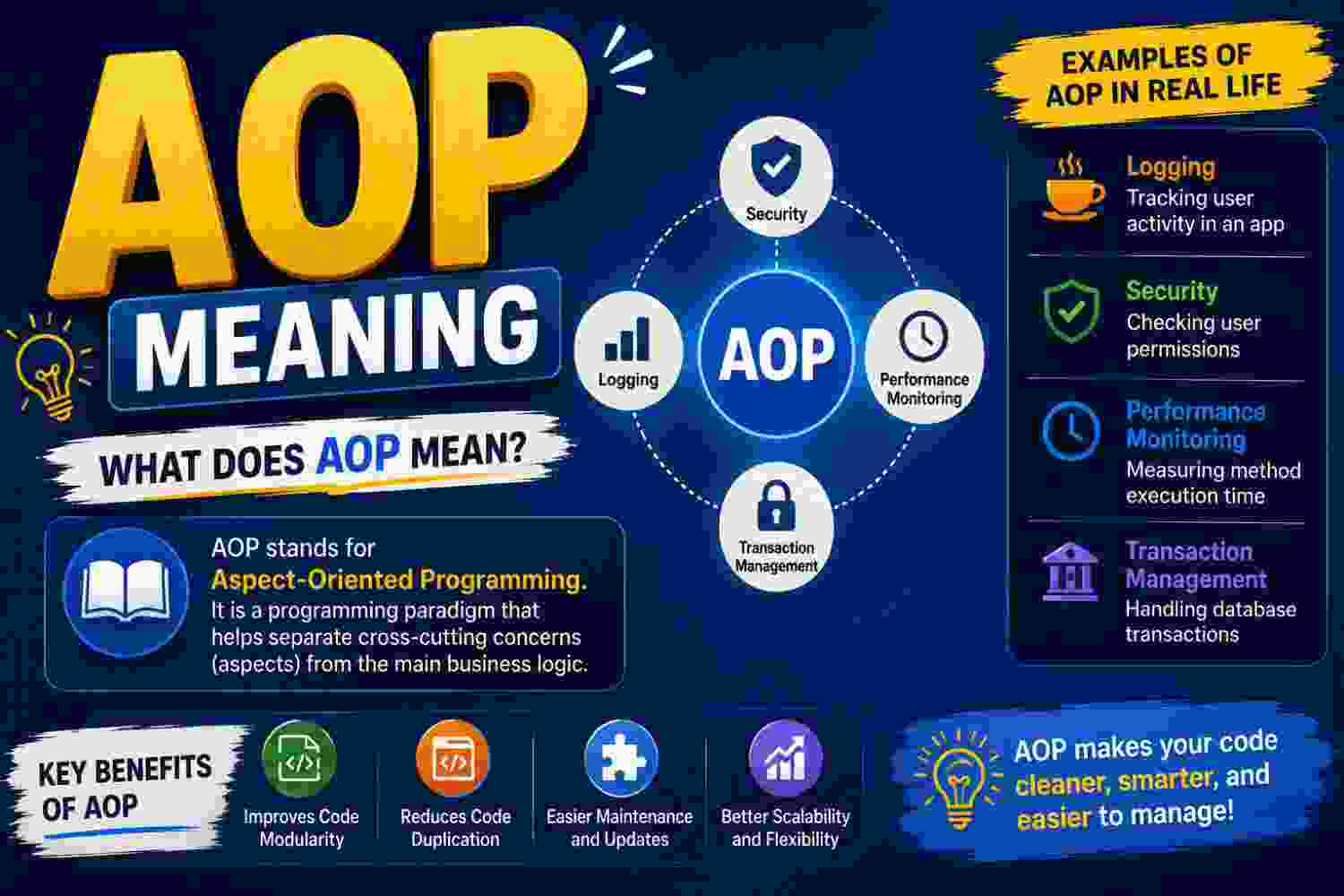
- Aspect-Oriented Programming — A coding technique used in software development
- Assembly of Prayer — A term used in some religious or community organizations
- Age of Prosperity — Occasionally used in gaming or fantasy contexts
- Association of Professionals — Used by some industry trade groups
If you searched “AOP meaning” in a work or business context, the Annual Operating Plan definition is almost certainly what you need, so we’ll stay focused there for the rest of this guide.
How Companies Actually Build an AOP
Creating an AOP isn’t a quick spreadsheet exercise. It’s a months-long process that involves multiple departments, finance teams, and senior leadership approval.
Step-by-Step AOP Planning Process
The typical corporate AOP cycle looks something like this:
- Finance reviews the previous year’s performance against the last AOP
- Department heads submit budget requests and growth projections
- Leadership negotiates trade-offs between departments competing for resources
- The finalized AOP gets approved by the board or executive team
- Teams track monthly and quarterly performance against the AOP targets
Most companies start this AOP process three to four months before the new fiscal year begins.
What an AOP Document Actually Contains
People assume an AOP is just a budget sheet. The reality involves far more strategic detail than that assumption suggests.
A complete AOP typically includes revenue forecasts, cost structures, hiring plans, capital expenditure requests, and risk assessments. Many companies also attach a narrative section explaining the “why” behind each number in the AOP.
AOP in Business Performance: The Real Numbers
Numbers make the AOP meaning much clearer, especially when you see how tightly companies track performance against their plan.
| Metric | Typical Benchmark |
|---|---|
| AOP Planning Duration | 8–12 weeks |
| Companies Using Formal AOP | 78% of mid-to-large enterprises |
| Average Revenue Variance Allowed | 5–10% from AOP target |
| Review Frequency | Monthly or quarterly |
| Departments Involved | Finance, Sales, HR, Operations, Marketing |
Quick human analysis: That 78% adoption rate shows just how standard the AOP process has become across mid-size and large companies. Smaller startups often skip a formal AOP early on, but almost every company adopts one once investors or boards start demanding predictable, trackable financial performance.
Why Some Teams Struggle With AOP Targets
The gap between hitting and missing AOP goals usually comes down to a few repeating factors inside organizations.
- Unrealistic assumptions — Overly optimistic revenue projections built into the AOP
- Market shifts — External economic changes the original AOP never accounted for
- Poor cross-team communication — Departments building AOP numbers in isolation
- Weak tracking systems — No clean way to measure actual results against the AOP
Is Understanding AOP Actually Important for Your Career?
This question matters more than most employees realize, especially anyone in finance, sales, or management roles.
The Genuine Career Benefits
Employees who understand their company’s AOP tend to make smarter decisions throughout the year. They know which projects align with budget priorities and which ones will get cut when resources tighten.
- Better ability to justify budget or headcount requests
- Stronger conversations during performance reviews tied to AOP goals
- Clearer understanding of company priorities and direction
- Increased credibility when presenting ideas to leadership
The Honest Challenges
No guide should hide the frustrating parts of working inside an AOP-driven company.
AOP targets sometimes feel disconnected from real market conditions, especially when leadership sets numbers before consulting frontline teams. Missing AOP goals can also trigger stressful reviews, budget cuts, or hiring freezes that affect entire departments overnight.
Frequently Asked Questions
What does AOP stand for in business?
AOP stands for Annual Operating Plan, a yearly document that outlines a company’s financial targets, budgets, and operational goals for the upcoming fiscal year.
Is AOP the same as a budget?
Not exactly. A budget is one part of the AOP, but the full AOP also includes strategic goals, hiring plans, and performance metrics beyond just financial numbers.
How long does the AOP process usually take?
Most companies spend eight to twelve weeks building their AOP, starting several months before the new fiscal year officially begins.
Who is responsible for creating the AOP?
Finance teams typically lead the AOP process, but every department head contributes budget requests and targets specific to their own team.
What happens if a company misses its AOP targets?
Missing AOP targets usually triggers a review process, which can lead to budget reallocation, hiring freezes, or revised goals for the remaining quarters.
Does AOP mean the same thing in every industry?
No, AOP can mean Annual Operating Plan in business, Aspect-Oriented Programming in software, or other terms depending on the specific industry context.
Is AOP the same as a strategic plan?
Not quite. A strategic plan usually covers multiple years and broad vision, while the AOP breaks that vision into specific, trackable actions for a single year.
Final Verdict on AOP Meaning
AOP means far more than a boring corporate buzzword tossed around in meetings. It represents the actual financial and operational backbone that decides budgets, hiring, and priorities across an entire company.
If you work anywhere near finance, sales, or leadership, understanding your company’s AOP gives you a real advantage during reviews and planning discussions. Ask to see your department’s AOP breakdown next cycle, and you’ll understand your job’s bigger picture far better than most of your coworkers.