
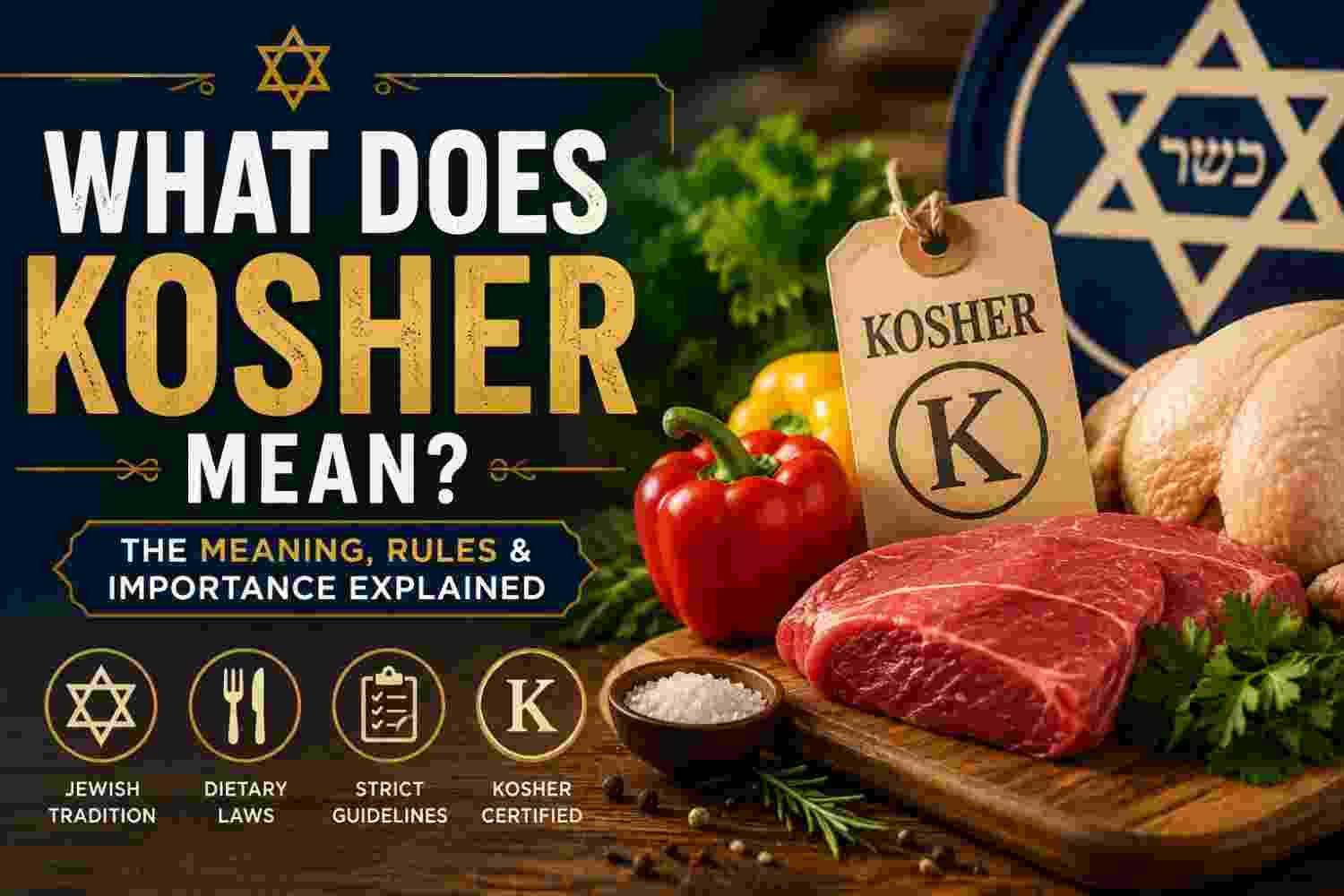
Kosher translates to “fit” or “proper” in Hebrew. In the food world, it means a product meets a strict set of biblical dietary laws found in the Torah. These rules dictate which animals you can eat, how they must be slaughtered, and what foods can’t mix together.
Many people assume kosher is just “blessed by a rabbi.” That’s a massive oversimplification. A rabbi does bless the food. Instead, a trained supervisor called a mashgiach inspects the entire production process to make sure every ingredient and machine follows the rules.
The biggest surprise for most shoppers? Kosher law isn’t just about food ingredients. It also covers how equipment is cleaned, how animals are treated during slaughter, and even how grapes are processed into wine. This depth is why certification matters.
The Ancient Origins: Why Kosher Laws Exist
The kosher system comes from the Torah, primarily the books of Leviticus and Deuteronomy. These texts list permitted and forbidden animals, prohibit mixing meat and dairy, and require a specific slaughter method called shechita.
But why did these laws start? Scholars debate this, but one leading theory is that kosher rules evolved as a public health measure in ancient times. Pork, for example, carried a high risk of trichinosis in hot climates without refrigeration. Shellfish spoil quickly and cause food poisoning.
Another theory is spiritual discipline. Following kosher forces you to think before every bite. It turns eating from a mindless act into a daily practice of mindfulness. That psychological benefit still resonates today, even for secular consumers.
The 3 Main Kosher Food Categories (With Real-World Examples)
Kosher food falls into three buckets. Once you understand these, reading a label becomes much easier.
| Category | What It Includes | Key Rule | Common Examples |
|---|---|---|---|
| Meat (Fleishig) | Beef, lamb, goat, certain poultry | Must come from a kosher animal slaughtered via shechita; cannot mix with dairy | Kosher brisket, chicken, hot dogs |
| Dairy (Milchig) | Milk, cheese, butter, yogurt | Must come from a kosher animal; cannot mix with meat | Kosher-certified cheddar, cream cheese |
| Pareve | Fish with fins and scales, eggs, fruits, vegetables, grains | Neutral; can be eaten with either meat or dairy | Salmon, apples, rice, pasta |
Fish is tricky because only fish with both fins and scales qualify. That means no catfish, shark, or shellfish. Eggs from kosher birds are fine, but any egg with a blood spot must be discarded.
The meat-dairy separation rule is absolute. You can’t cook them together, eat them together, or even use the same dishes and utensils. Observant Jewish homes often have two full sets of dishes, pots, and silverware.
The Certification Process: How to Spot a Fake Kosher Label
A kosher symbol on a package is called a hechsher. But not all hechshers are equal. Some are widely trusted; others are basically meaningless. Here’s what to look for.
The most reliable symbols come from major agencies like the OU (Orthodox Union), OK Kosher, Star-K, and Kof-K. These organizations send mashgichim to factories unannounced to inspect ingredients, equipment, and production lines.
A product that simply says “kosher style” or “Jewish food” without a symbol is not certified. That’s a marketing trick. Also, a plain “K” on a package often means the company self-certified without third-party oversight—so buyer beware.
To verify a symbol, you can check the agency’s website or use a kosher certification app. Many agencies now post their certified products online. When in doubt, contact the manufacturer and ask for the certification letter.
7 Surprising Health and Safety Benefits of Kosher Food
Kosher food isn’t automatically healthier than non-kosher food, but the certification process does create some real advantages.
- Fewer Hidden Allergens: Kosher labels must clearly identify dairy, meat, and pareve status. This helps people with lactose intolerance or dairy allergies avoid cross-contamination.
- Stricter Insect Control: Kosher law prohibits eating most insects, so certified produce undergoes extra washing and checking for bugs. You’re less likely to find a caterpillar in your lettuce.
- No Pork or Shellfish: These common allergens and high-cholesterol foods are completely excluded. That alone makes kosher diets cleaner for some people.
- Humane Slaughter Standards: Shechita requires a razor-sharp knife and a single, swift cut to minimize animal suffering. The animal must be healthy before slaughter.
- Equipment Sanitation: Kosher facilities must clean equipment thoroughly between meat and dairy runs. This reduces cross-contamination risks for everyone.
- No Blood Consumption: Kosher meat is salted and soaked to remove blood, which also reduces surface bacteria and extends shelf life.
- Transparent Supply Chains: Because every ingredient must be documented and approved, kosher products often have a more traceable supply chain than generic foods.
Common Myths About Kosher Food Debunked
Misinformation about kosher food runs deep. Let’s kill the biggest myths right now.
Myth 1: Kosher food is blessed by a rabbi. No rabbi blesses food. A supervisor inspects it, but no blessing is said over the product itself. The only blessing is the one you say before eating.
Myth 2: Kosher means organic or healthy. Kosher certification doesn’t address pesticides, antibiotics, or nutritional value. You can buy kosher-certified soda and candy loaded with sugar.
Myth 3: All kosher symbols are the same. Wrong. There are hundreds of kosher agencies, and some have lax standards. Stick with major agencies like OU, OK, Star-K, or Kof-K.
Myth 4: Kosher slaughter is cruel. The shechita method is designed to be quick and painless. Studies show that when performed correctly, the animal loses consciousness almost instantly.
Myth 5: Only Jews buy kosher food. False. Muslims, Seventh-day Adventists, vegetarians, and health-conscious consumers are driving kosher market growth. Over 40% of kosher food buyers are non-Jewish.
How to Shop Kosher on a Budget: Insider Tips
Kosher food often costs more, but you don’t have to blow your grocery budget. Use these strategies to save money without sacrificing certification.
First, shop at discount supermarkets that carry private-label kosher products. Stores like Aldi, Trader Joe’s, and Costco now stock many OU-certified items at lower prices than specialty kosher markets.
Second, focus on naturally kosher foods. Fresh fruits, vegetables, rice, beans, and unprocessed grains are pareve and don’t need certification. You only need a hechsher on processed or packaged goods.
Third, buy meat in bulk and freeze it. Kosher meat is expensive because of the extra processing and supervision. Look for sales around Jewish holidays, then stock up and portion it out.
Finally, join a kosher buying club or co-op. Many communities have group purchasing programs that negotiate lower prices on meat, cheese, and pantry staples. The savings can be 20–30% off retail.
Frequently Asked Questions About Kosher
Can Muslims eat kosher food?
Yes, in most cases. Kosher meat is slaughtered similarly to halal, and kosher food never contains pork or alcohol (except kosher wine). However, kosher certification doesn’t include a Muslim blessing, so strict halal followers may still prefer halal-certified products.
Does kosher food cost more?
Often yes, because of supervision fees and extra processing. But naturally kosher foods like produce and grains cost the same as non-kosher. You can save money by focusing on unprocessed foods and buying store brands.
Is kosher salt actually kosher?
Kosher salt is not certified kosher. The name comes from its use in the koshering process to draw blood out of meat. Most kosher salt is pure sodium chloride with no additives, but it has no kosher certification unless specifically labeled.
What makes wine kosher?
For wine to be kosher, the entire production process—from crushing grapes to bottling—must be handled by Sabbath-observant Jews. If the wine is then boiled or flash-pasteurized, it becomes “mevushal” and can be handled by non-Jews without losing kosher status.
Can kosher food contain gluten?
Absolutely. Kosher certification has nothing to do with gluten. You can find kosher-certified bread, pasta, and baked goods that contain wheat. If you need gluten-free, look for a separate gluten-free label in addition to the kosher symbol.
Why do some kosher products have a “D” next to the symbol?
The “D” means dairy. The product either contains dairy ingredients or was made on equipment also used for dairy. If you’re allergic to dairy or keeping meat and dairy separate, always check for the “D” or “DE” (dairy equipment) label.
Is kosher food safer than non-kosher food?
Not necessarily. Kosher certification adds an extra layer of inspection for ingredients and equipment, but it doesn’t guarantee freedom from pathogens like salmonella or E. coli. You still need to follow safe food handling practices at home.
Conclusion: Your Next Steps to Kosher Confidence
You now know more about kosher food than 90% of grocery shoppers. The real secret is that kosher isn’t just a religious ritual—it’s a system of transparency, discipline, and quality control that benefits anyone who eats.
Start small. Next time you shop, look for the OU symbol on a few pantry staples. Compare the ingredient list to a non-kosher version. Notice how the kosher product often has fewer hidden additives and clearer allergen warnings.