
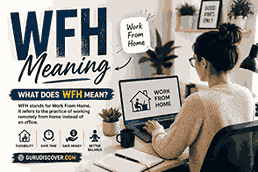
You see “WFH” in job postings, team chats, and news headlines. Yet the wfh meaning still feels slippery—an abbreviation tossed around without a shared understanding. That confusion can lead you to accept the wrong role, set up a dysfunctional home office, or overlook real opportunities to design a better work life. This guide untangles every thread of the work-from-home concept, giving you clear, actionable knowledge that puts you in control.
What Does WFH Actually Mean?
WFH simply stands for “work from home.” It describes any arrangement where an employee performs their job duties from their primary residence instead of commuting to a central office or other employer-provided location. The wfh meaning centers on substituting a domestic workspace for a traditional corporate one, usually supported by internet access, a computer, and communication tools.
The term first gained widespread use in internet slang and corporate shorthand during the early 2000s, but it exploded into everyday language in 2020. Even now, the wfh meaning carries nuances that differ depending on company policy, employment contract, and individual expectations.
The Origins and Evolution of Work From Home
Remote labor isn’t a modern invention. Before the digital age, piecework, cottage industries, and rural trades allowed people to earn without leaving their homes. What changed was connectivity. Broadband internet, cloud computing, and video conferencing transformed “working from home” from an occasional perk into a viable long-term model.
Government data captures the shift. According to the U.S. Bureau of Labor Statistics, 27% of employed Americans worked from home at least occasionally in 2022, a figure that has stabilized well above pre-2020 levels. The wfh meaning evolved from a rare exception into a mainstream work style that now influences real estate markets, urban planning, and corporate culture.
How WFH Differs From Telecommuting and Remote Work
People often use these terms interchangeably, but subtle distinctions exist.
- Telecommuting originally referred to working outside the office while staying connected via phone and email. It often implied occasional remote days.
- Remote work encompasses any location-independent work, including roles based in co-working spaces, cafés, or different countries.
- WFH specifically means working from your home environment. The wfh meaning is location-specific, whereas remote work can happen anywhere.
Understanding these differences helps you negotiate arrangements that match your lifestyle.
Types of WFH Arrangements
Not every work-from-home setup looks the same. Employers structure WFH in several ways.
- Fully Remote: Your home is your exclusive workplace. You never go to a company office.
- Hybrid: You split your time between home and an office on set days or flexible schedules.
- Flexible WFH: You primarily work on-site but have permission to stay home occasionally, such as during bad weather or personal appointments.
- Outcome-Based WFH: Your physical location doesn’t matter as long as you meet deadlines and performance targets.
Each model shapes the daily wfh meaning for workers, affecting everything from wardrobe choices to collaboration rhythms.
The Real Benefits of a WFH Setup
Working from home delivers tangible advantages when planned properly. People who embrace the wfh meaning fully often report:
- Fewer commute costs and time savings: Eliminating travel frees up hours each week.
- Improved focus: Quiet home environments boost deep work for many professionals.
- Greater schedule autonomy: You can align work blocks with your natural energy peaks.
- Geographic flexibility: You can live farther from expensive urban centers.
- Better integration of personal responsibilities: Attending to family needs or home tasks becomes simpler.
A Stanford study by economist Nicholas Bloom found that remote workers in a large Chinese travel agency increased productivity by 13%, with quieter workspaces and fewer breaks driving the gains. The wfh meaning extends beyond personal comfort—it can produce measurable output improvements.
Common Challenges When You Work From Home (and Fixes)
The wfh meaning also includes very real hurdles. Acknowledging them upfront prevents discouragement.
| Challenge | Why It Happens | Quick Fix |
| Blurred boundaries | Workspace overlaps with living space | Set strict start and end times; wear work clothes |
| Loneliness | Lack of casual social interaction | Schedule virtual coffee chats with colleagues |
| Communication silos | Informal office hallway conversations disappear | Use persistent chat channels and daily check-ins |
| Home distractions | Family members, chores, and TV compete for attention | Create a dedicated room or corner with a door |
| Overworking | The office never “closes” | Use a shutdown ritual and turn off notifications |
Each of these problems has practical solutions. Tackling them directly ensures the wfh meaning you experience stays positive.
Who Can Work From Home? Industries and Job Roles
Not every profession translates to a home setting, but the list of compatible roles keeps growing. Jobs that focus on digital information, communication, and independent output fit the wfh meaning most easily.
- Tech & IT: Software developers, cybersecurity analysts, support specialists
- Copywriters, editors, journalists, and translators are all involved in writing and content creation.
- Marketing & Design: Graphic designers, social media managers, SEO strategists
- Finance & Accounting: Bookkeepers, financial analysts, tax preparers
- Customer Service: Remote call center agents, chat support specialists
- Education & Training: Online tutors, instructional designers, e-learning facilitators
- Sales: Many inside sales roles transition smoothly to home offices
- Administrative Support: Virtual assistants, data entry clerks, scheduling coordinators
Companies in these sectors have fully embraced the wfh meaning, proving that physical presence isn’t mandatory for high-quality work.
Essential Tools and Technology for WFH Success
A solid WFH setup relies on a toolkit that keeps you connected and productive. Investing in the right technology prevents frustration and burnout.
- Computer or laptop: Fast enough to run your required software without lag.
- High-speed internet: Symmetrical fiber or cable with at least 50 Mbps download and upload speed.
- Noise-canceling headset: Essential for clear audio on calls and focus.
- Video conferencing software: Zoom, Microsoft Teams, or Google Meet.
- Project management platforms: Asana, Trello, Monday.com, or Notion.
- Cloud storage and collaboration: Google Workspace, Microsoft 365, or Dropbox.
- Cybersecurity tools: VPN, password manager, and endpoint protection.
Without this foundation, the wfh meaning can quickly slide into technical chaos.
Setting Up a Productive Home Office Space
Physical environment directly impacts your energy, posture, and output. To honor the true wfh meaning, treat your workspace like a professional zone.
- Choose a dedicated spot, even if it’s a corner of the living room.
- Invest in an ergonomic chair that supports your lower back.
- Position your screen at eye level to reduce neck strain.
- Let natural light flood the area; add a desk lamp for task lighting.
- Keep cables organized with clips or a cable tray.
- Add a plant or personal item that makes the space feel alive.
A well-designed workspace signals to your brain that “work mode” is on. This psychological shift is central to the wfh meaning of sustainable remote work.
Mastering Work-Life Balance While Working Remotely
The wfh meaning loses its appeal fast when you can’t disconnect. Balance requires deliberate habits.
- Morning routine: Wake up at the same time, shower, and eat breakfast before logging in.
- Time blocking: Assign specific hours for deep work, meetings, and breaks.
- Physical movement: Schedule short walks or stretches between work blocks.
- Social connection: Make non-work phone calls, join local clubs, or work from a café once a week.
- End-of-day ritual: Close all work tabs, write down tomorrow’s top three tasks, and physically leave your workspace.
A FlexJobs survey found that 65% of remote workers would choose full-time WFH if given the option, but only when they control their schedules effectively. The wfh meaning aligns with freedom, not with being tethered to a laptop 24/7.
WFH vs. Office vs. Hybrid: At a Glance
| Aspect | WFH | Office | Hybrid |
| Commute | None | Daily round trip | Partial commute on office days |
| Social interaction | Primarily virtual | In-person collaboration | Mix of both |
| Work environment control | Full control over noise, temperature, lighting | Limited control | Moderate control on home days |
| Equipment responsibility | Self-provided or company stipend | Company-provided | Shared responsibility |
| Spontaneous communication | Requires scheduled chats | Instant, informal conversations | Reduced spontaneity |
| Best for | Independent, focused tasks | Collaborative, hands-on projects | Teams that need flexibility with occasional face-to-face |
Understanding these differences ensures the wfh meaning you seek matches your personality and job demands.
WFH Meaning in the Post-Pandemic World: What Changed?
Before 2020, WFH was often viewed with suspicion—managers worried about accountability, and employees feared missing promotions. The pandemic forced a global experiment that rewrote the wfh meaning entirely. Companies discovered that remote teams could maintain or even boost productivity. Employees proved they could be trusted.
Now, the wfh meaning includes permanent policy shifts rather than temporary adjustments. Many large corporations have adopted hybrid models, while smaller firms have gone fully remote. Job seekers increasingly filter opportunities by WFH flexibility. Real estate trends show a migration from dense cities to suburbs and rural areas, directly reshaping communities.
How to Convince Your Employer to Let You WFH
If your company remains office-first, a strategic pitch can open WFH doors.
- Document your solo productivity data: Show performance metrics that improved during times you worked independently.
- Propose a trial period: Suggest a 30-day WFH arrangement with clear checkpoints.
- Present a communication plan: Outline how you’ll stay reachable, attend meetings, and report progress.
- Address manager concerns directly: Acknowledge fears about visibility and propose solutions like daily stand-up calls.
- Reference industry norms: Cite how peers in your field successfully embrace the wfh meaning.
When you frame WFH as a productivity tool rather than a personal convenience, decision-makers listen.
Future Trends Shaping Work From Home
The wfh meaning will continue to evolve. Watch these developments.
- Asynchronous workflows: Teams will rely less on real-time meetings and more on recorded updates.
- Virtual reality offices: Immersive environments may bridge the gap between home and physical presence.
- Global talent pools: Employers will hire across borders, increasing competition and opportunity.
- Home office stipends: Companies will budget for employee home setups as a standard benefit.
- Four-day workweeks: The combination of WFH and compressed schedules may redefine full-time employment.
Staying ahead of these trends positions you to benefit from the ever-expanding wfh meaning.
Frequently Asked Questions About WFH Meaning
1. What is the simple wfh meaning?
WFH means “work from home.” It describes a work arrangement where you carry out your job responsibilities from your residence rather than commuting to a central workplace.
2. Is WFH the same as remote work?
Not exactly. WFH is a subset of remote work. Remote work can happen from anywhere—a café, a co-working space, or a different country—while WFH specifically means you work from your home. The wfh meaning is location-tied to your residence.
3. How do I stay productive while working from home?
Create a dedicated workspace, set consistent work hours, use time-blocking, and minimize distractions. The true wfh meaning only works when you treat home as a professional environment during work time.
4. What equipment do I need for a home office?
A reliable computer, high-speed internet, an ergonomic chair, a noise-canceling headset, and collaboration software. Proper tools anchor the practical wfh meaning and prevent technical friction.
5. Can I work from home permanently?
Many employers offer permanent WFH or hybrid schedules. Your ability depends on your role, company policy, and how you negotiate. The post-pandemic shift has made permanent WFH a realistic long-term option for millions.
6. How does WFH impact mental health?
WFH can improve mental health by reducing commute stress and increasing autonomy. However, it can also cause loneliness and burnout without proper boundaries. The wfh meaning for your well-being hinges on intentional habits and social connection.