
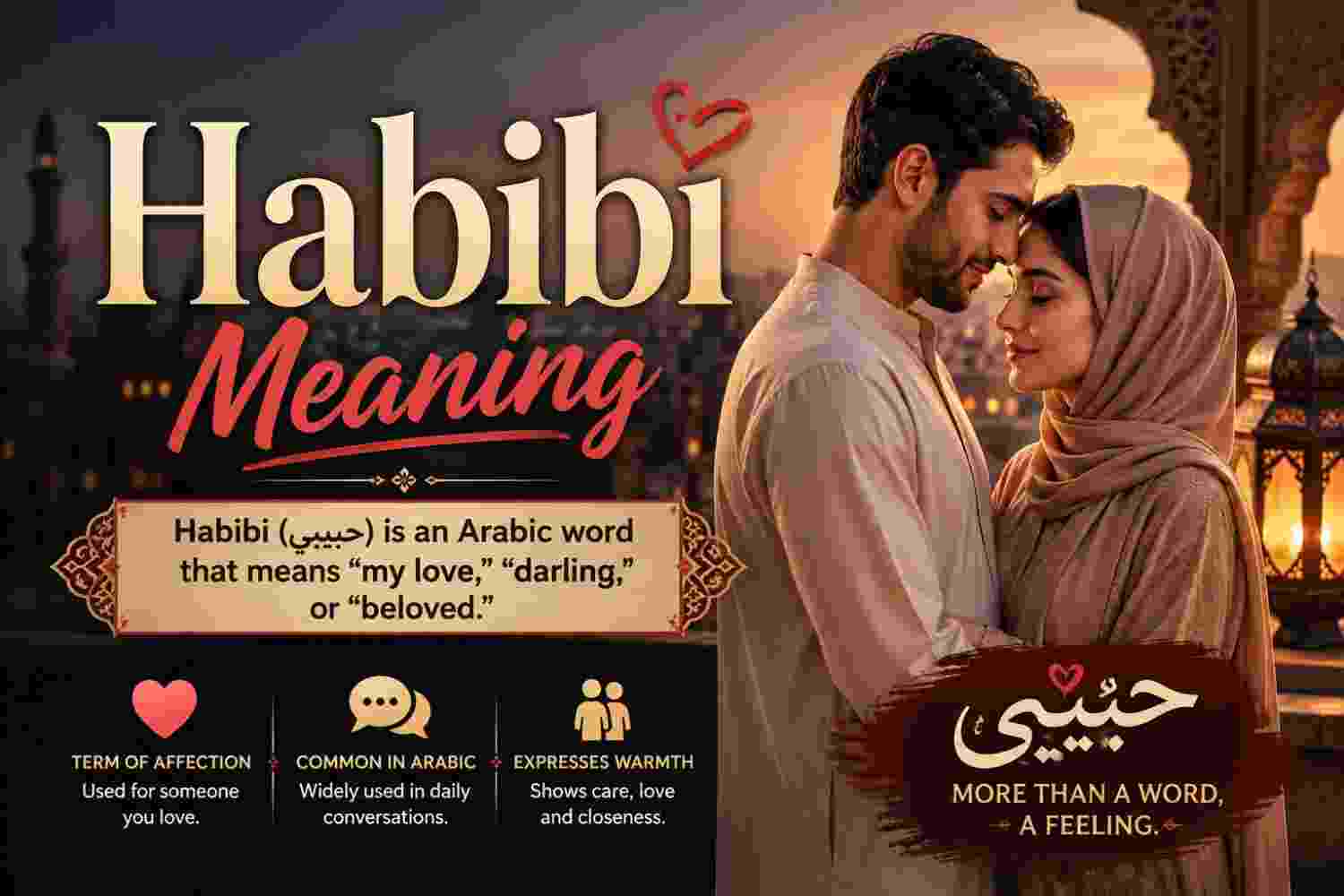
You have probably heard habibi in a song, a movie, or a friend’s text and assumed it simply means “my dear.” That assumption is exactly why most people use it wrong in real conversations.
Habibi carries a weight that Google Translate never shows. It can express romantic love, deep friendship, playful sarcasm, or even quiet frustration depending on tone, region, and relationship.
In this guide, you will learn the seven unspoken rules that separate a natural Arabic speaker from a walking translation app. No fluff, no textbook definitions—just the real cultural mechanics.
What Does Habibi Really Mean?
At its most basic level, habibi means “my beloved” or “my dear” in Arabic. It comes from the root word hubb, which means love. The suffix -i turns the noun into a possessive form: my love.
Arabic builds meaning through roots, not isolated words. The root h-b-b appears in words for love, liking, and even grain or seeds. That root gives habibi a warmth that survives translation but not always context.
When a mother calls her son habibi, she is not flirting. When a shopkeeper calls a customer habibi, he is not declaring romance. The word stretches across formal and informal settings in ways that confuse outsiders.
This flexibility is the first secret. Habibi is a relational word, not a fixed label. Its exact English equivalent shifts depending on who is speaking, who is listening, and what is happening between them.
The Emotional Spectrum of Habibi
Habibi refuses to stay inside one emotional box. A husband whispering it to his wife means something different from a taxi driver saying it to a passenger.
That range is why habibi appears in love songs, arguments, and casual greetings. Understanding the emotional register is more important than memorizing a dictionary definition.
Here are four common emotional modes:
- Romantic desire: slow, soft, paired with eye contact.
- Friendly warmth: quick, casual, used with a handshake or pat on the shoulder.
- Parental care: firm but tender, often attached to a name or a gentle correction.
- Sarcastic warning: flat or drawn out, followed by a pointed remark.
Romantic Love
In a romantic relationship, habibi functions like “my love” or “darling.” It carries intimacy and softness. Couples use it in private moments, phone calls, and even tense conversations to keep a thread of affection alive.
Arab pop songs lean heavily on habibi because it fits both longing and devotion. A singer can stretch the word across several notes to signal heartbreak or desire.
If a romantic partner uses your name instead of habibi after a fight, that shift often signals emotional distance. Returning to habibi means the warmth is coming back.
Friendly Affection
Close friends call each other habibi without any romantic meaning. In many Arab cultures, men use it with male friends as a sign of brotherhood and loyalty.
The word can also soften requests between strangers. A waiter might say “habibi, one moment” to a customer to create a friendly, respectful tone.
This friendly use is common in Lebanon, Egypt, Jordan, and the Gulf. It is not flirting; it is social glue.
Sarcasm or Mild Annoyance
Tone flips habibi into a polite warning. A parent can say “habibi, stop that” with a firm tone, and the word becomes a gentle scold.
Friends use it before delivering criticism. “Habibi, you were wrong” sounds softer than a blunt accusation but still lands clearly.
Listen for a stretched first syllable or a flat delivery. That often signals impatience rather than affection.
Habibi vs. Habibti: The Gender Rule Most Learners Miss
Here is where many non-native speakers stumble. Arabic nouns carry gender, and habibi changes when the person being addressed is grammatically female.
Habibi is the masculine form. Habibti is the feminine form. A man speaking to a woman should say habibti, while a woman speaking to a man says habibi.
The rule is based on the person being addressed, not the speaker’s gender. That small distinction changes the word’s ending and its social acceptance in formal settings.
| Form | Gender of Person Addressed | Example |
|---|---|---|
| Habibi | Male or mixed group | “Yalla habibi” |
| Habibti | Female | “Shukran habibti” |
| Habib albi | Any gender, intense | “Habib albi, come here” |
Habib albi means “love of my heart.” It steps up the emotional intensity beyond a simple habibi or habibti.
Why Mixing Them Up Matters
Using habibi with a woman is not always a grave mistake in casual slang. Many pop songs and dialects blur the gender line because habibi has become a universal term of endearment.
But in formal Arabic or conservative settings, using the wrong form can sound careless. It shows you learned the word from a song without understanding its grammar.
When in doubt, mirror the form native speakers use with you. That mirroring tactic prevents awkward moments and shows linguistic awareness.
Habibi in Music, Pop Culture, and Global Slang
Habibi has traveled far beyond Arabic-speaking countries. It appears in French rap, Bollywood tracks, Spanish pop, and English social media captions.
The word now lives a double life. It remains deeply emotional in Arabic households, while also becoming a trendy global slang word in online spaces.
From Fairuz to TikTok
Lebanese singer Fairuz used habibi in songs that became regional anthems. Egyptian classics, Gulf pop, and Moroccan chaabi all lean on the word to trigger instant emotional recognition.
Western artists have borrowed it too. The word appears in lyrics, fashion branding, and Instagram captions because it sounds warm and exotic.
On TikTok and Instagram, non-Arab users often write “habibi” to a friend or pet without knowing the gender rules. That global spread has made the word more visible but also more diluted.
When Habibi Becomes Slang
In some friend groups, habibi acts like “bro” or “dude.” It can open a sentence, soften a request, or fill a pause.
This slang use is common in urban youth culture across the Middle East and diaspora communities. It signals belonging even when the speakers mix Arabic with English or French.
The danger is treating habibi as a one-size-fits-all word. Its emotional history still lives underneath the casual usage, and native speakers feel that history.
Common everyday phrases include:
- Yalla habibi: come on, my dear / let’s go, buddy.
- Habibi, shukran: thanks, dear.
- Enta habibi: you are my beloved.
- Ya habibi: oh my love, often used in songs or complaints.
7 Cultural Rules for Using Habibi Without Offending Anyone
These seven rules come from observing native speakers across Egypt, Lebanon, the Gulf, and North Africa. They separate respectful usage from accidental comedy.
- Match the gender form when formality matters. Use habibti for a woman and habibi for a man in professional or conservative settings.
- Let tone drive meaning. A warm smile and a flat stare change the same word completely.
- Do not overuse it with strangers. Calling every cashier habibi can feel fake or overly familiar in some regions.
- Respect regional preferences. Egyptians use it freely; some Gulf locals reserve it for closer relationships.
- Learn the phrase “ya habibi.” The particle “ya” adds an emotional punch and is common in songs, prayers, and complaints.
- Never use it sarcastically before you know someone well. Sarcasm requires shared context.
- Pay attention to body language. If the other person does not return the term, switch to a neutral greeting.
Each rule protects you from the most common social missteps. Together, they turn a simple vocabulary word into a tool for real connection.
A Quick Linguistic Biography of Habibi
The word did not appear yesterday. Its root hubb is ancient and appears in classical Arabic poetry, the Quran, and pre-Islamic verses.
| Era | Usage Snapshot |
|---|---|
| Pre-Islamic poetry | Root hubb used for longing and tribal loyalty |
| Classical Arabic | Habibi appears in religious and romantic texts |
| 20th-century music | Fairuz, Umm Kulthum, and Abdel Halim popularize it globally |
| Internet age | Habibi spreads through memes, songs, and diaspora slang |
This timeline explains why habibi feels both ancient and modern. It carries centuries of poetic weight while still fitting into a casual text message.
Common Mistakes Non-Native Speakers Make
- Assuming habibi is always romantic. It is often platonic or casual.
- Using habibi for a woman in formal Arabic. The correct form is habibti.
- Spelling it as “habiby” or “7abibi.” Transliteration varies, but pronunciation matters more than spelling.
- Using it to flirt with strangers. That can come across as disrespectful, not charming.
These mistakes rarely cause serious offense, but they mark you as a beginner. Fixing them instantly makes your Arabic sound more natural.
Frequently Asked Questions
What is the exact habibi meaning in English?
It means “my beloved,” “my dear,” or “my love.” The exact translation shifts with context, tone, and the relationship between speaker and listener.
Can a woman say habibi to a man?
Yes. Habibi is the masculine form, so a woman addresses a man as habibi. If she is speaking to a woman, she should use habibti.
Is habibi only for romantic partners?
No. It works between friends, family members, and even strangers in casual settings. Romantic love is only one of its many emotional registers.
What does ya habibi mean?
It means “oh my beloved” or “my dear.” The ya adds direct address and emotional emphasis, which is why it appears so often in songs and heartfelt pleas.
Is it offensive to use habibi if I am not Arab?
Generally no, if used respectfully. Many Arab speakers appreciate the effort. Just follow tone and gender rules, and avoid using it to flirt with strangers.
How do you pronounce habibi correctly?
Say ha-BEE-bee. Stress the second syllable. Avoid a flat rhythm or overemphasizing the first syllable.
The Final Verdict: One Word, Many Lives
Habibi is not a simple translation problem. It is a living word that shifts meaning with tone, region, gender, and emotional history.
The insider tip is simple. Learn the word as a feeling, not a definition. Listen to how native speakers use it around you, mirror their tone, and let context guide you.
Once you understand that flexibility, habibi stops being a foreign word you memorize. It becomes a small key to the warmth, humor, and unspoken rules of Arabic-speaking cultures.