
I still remember kneeling beside my grandmother’s garden as a child, staring at a sea of tiny blue blossoms that seemed to hold secrets. She called them forget-me-nots and whispered, “These little flowers carry the weight of promises you never want to break.” That moment planted a question I’ve spent years answering: what makes the forget-me-not flower meaning so enduring across centuries and cultures?
Table of Contents
- The Core Forget-Me-Not Flower Meaning: Love and Remembrance
- Meet the Myosotis Plant: Tiny Bloom, Giant Heart
- The Legend Behind the Name: A Knight’s Final Cry
- Forget-Me-Not Color Symbolism: Blue, Pink, White, and More
- Cultural Meanings: How Different Traditions Embrace the Flower
- The Forget-Me-Not as a Remembrance Symbol: Alzheimer’s and Beyond
- Victorian Floriography: Secret Messages Sent in a Bouquet
- Spiritual and Religious Interpretations
- When to Give Forget-Me-Not Flowers: Occasions and Sentiments
- Forget-Me-Not in Art, Literature, and Tattoos
- Growing Forget-Me-Nots: Cultivate Devotion in Your Own Garden
- Frequently Asked Questions About Forget-Me-Not Flower Meaning
- Plant Your Own Promise: Where the True Meaning Takes Root
The Core Forget-Me-Not Flower Meaning: Love and Remembrance
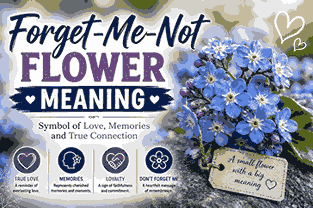
At its heart, the forget-me-not flower meaning announces two things in a quiet voice: true love and faithful remembrance. People worldwide turn to these five-petaled blossoms when they need to say “I will never forget you” or “My affection withstands every trial.” This association doesn’t rest on chance. The flower’s very name demands memory, a plea stitched into folklore and repeated by lovers, mourners, and artists for over 600 years.
Botanically, the plant belongs to the genus Myosotis, a name derived from the Greek for “mouse’s ear,” a nod to the soft, rounded shape of its leaves. But no Latin term can contain the emotional heft the forget-me-not flower meaning carries. A gift of these blooms tells a partner, “You remain etched in my soul.” At a memorial, it says, “Your presence still lives in me.” This dual promise—romantic and memorial—makes the flower rare. Few other symbols can slide seamlessly between a wedding anniversary and a tribute to the departed without losing their integrity.
When I arrange forget-me-nots for a grieving friend, I lean into the remembrance angle. When I weave them into a hand-tied wedding posy, I emphasize the eternal love story. The forget-me-not flower meaning stays pliable precisely because it roots itself in a universal human terror: being forgotten. That emotional anchor is why you see the flower pop up again and again, in handwritten notes, on cremation urns, and inked onto skin.
Meet the Myosotis Plant: Tiny Bloom, Giant Heart
You might overlook forget-me-nots in a meadow, their blooms barely reaching half an inch across. Stop and look closer. Each flower presents five rounded petals fused at the base, typically a piercing blue with a tiny yellow or white eye. This sun-like center acts like a landing pad for pollinators and a visual anchor for the human gaze. The forget-me-not flower meaning begins with that gentle, hypnotic stare.
Native to Europe and parts of Asia, the plant naturalizes easily in moist, shaded soils. Species range from the classic woodland Myosotis sylvatica to the aquatic Myosotis scorpioides, which thrives at pond edges. All share a hairy stem and a habit of spreading into drifts of color that seem to whisper rather than shout. This modesty matches the flower’s message. It doesn’t need flamboyance to be unforgettable.
The tiny size hides a tough, perennial spirit. Forget-me-nots self-seed with abandon, returning year after year without your intervention—a living metaphor for memories that refuse to fade. That resilience reinforces the forget-me-not flower meaning: genuine devotion outlasts seasons and obstacles.
The Legend Behind the Name: A Knight’s Final Cry
The most famous origin story for the forget-me-not flower meaning plunges us into a 15th-century German riverbank. A knight and his lady walked along the water’s edge. Bending to pick the delicate blue flowers she admired, the knight lost his footing in his heavy armor and tumbled into the current. As the river dragged him under, he flung the bouquet toward her and shouted, “Vergiss mein nicht!”—forget-me-not.
That dying plea cemented the flower’s identity. Whether the tale recounts a real event or a romantic invention, it imprinted the forget-me-not flower meaning onto Western consciousness. You can still hear echoes of that knight’s cry in every lover’s request to be remembered.
Another legend, this one rooted in Christian lore, tells of the Christ child sitting on Mary’s lap and wishing that future generations could see her eyes. He touched the ground, and tiny blue flowers appeared—each mirroring her gentle gaze. This story adds a layer of divine maternal love to the forget-me-not flower meaning, broadening its scope beyond romance into the sacred bond between parent and child.
A third account credits God with naming the flower. While walking through the Garden of Eden, He passed a small blue bloom that whispered, “Forget me not, Lord.” Touched, God declared that this would be its name forever. These narratives, while varied, all orbit the same truth: the forget-me-not flower meaning is inseparable from the plea to be held in someone’s heart.
Forget-Me-Not Color Symbolism: Blue, Pink, White, and More
While the classic blue forget-me-not steals the spotlight, cultivated varieties open up fresh shades of meaning. Each color nudges the forget-me-not flower meaning in a distinct emotional direction. Use this guide to match your intention.
| Color | Symbolic Meaning | Best Occasion |
| Blue | Traditional remembrance, enduring loyalty, true love | Anniversaries, memorials, “thinking of you” gifts |
| Pink | Gentle affection, romantic admiration, budding love | New relationships, Valentine’s Day, bridal showers |
| White | Purity, spiritual connection, peaceful memories | Christenings, sympathy arrangements, meditation spaces |
| Purple | Dignity, deep respect, a touch of mystery | Retirement tributes, honoring mentors, milestone birthdays |
I keep a small vase of dried pink forget-me-nots on my writing desk to remind me of the softness real love demands. When I want to amplify the forget-me-not flower meaning of steadfast loyalty, I reach for the classic blue—the shade most etched into public imagination. The Victoria and Albert Museum’s collection of sentimental jewelry confirms that 19th-century lovers pressed blue forget-me-nots into lockets as tokens of fidelity, a practice documented in their archives. White blooms, with their crisp silence, serve well in funerals where you want to whisper “peace” rather than shout grief.
Cultural Meanings: How Different Traditions Embrace the Flower
The forget-me-not flower meaning shifts subtly as you travel the globe. In Germany, the flower retains its folkloric roots, a living emblem of the knight’s tale and a symbol of faithful partnership. German lodges of the Freemasons adopted the forget-me-not as a discreet sign of brotherhood during the 20th century, adding a layer of charitable remembrance.
Armenians hold the flower close for a heavier reason. The forget-me-not serves as the official emblem of the Armenian Genocide centennial commemoration. Its purple-blue petals represent the past, the dark center the present, and the twelve outward-spreading petals the twelve provinces lost during the genocide. This powerful adaptation expands the forget-me-not flower meaning to encompass national identity and collective survival.
In Newfoundland, Canada, the forget-me-not functions as a symbol of remembrance for the Royal Newfoundland Regiment and the staggering losses at Beaumont-Hamel during the First World War. People pin silk forget-me-nots to their lapels on July 1, Memorial Day, blending personal loss with patriotic pride.
Chinese folklore sometimes pairs the forget-me-not with the idea of a love that transcends even death, a tale of two lovers separated by fate yet bound by memory. Across all these traditions, the forget-me-not flower meaning remains anchored in the refusal to let someone or something slip into the void.
The Forget-Me-Not as a Remembrance Symbol: Alzheimer’s and Beyond
Few modern uses of the forget-me-not flower meaning carry more weight than its connection to dementia awareness. The Alzheimer’s Society in the UK adopted the forget-me-not as its emblem, recognizing the disease’s cruelest theft: the erosion of memory. When you wear an enamel forget-me-not pin or donate to a memory café, you stand with the millions of families watching a loved one fade.
I’ve walked with friends through the slow loss that dementia brings, and the flower’s plea—do not forget me—hits with a force few symbols can match. The Alzheimer’s Association has distributed over two million forget-me-not seeds across care homes, creating living gardens of solidarity. This initiative transforms the forget-me-not flower meaning from a passive poetic idea into an active, soil-stained act of resistance against forgetting.
Blue flower days and memory walks across Europe and North America lean on the same icon. In Newfoundland, the forget-me-not doubles for veterans’ remembrance, proving one flower can carry multiple collective wounds with grace. When I speak with caregivers, they often tell me that planting forget-me-nots feels like planting hope—a small, defiant color that insists their loved one’s story still matters.
Victorian Floriography: Secret Messages Sent in a Bouquet
The Victorians turned flower-giving into a coded language, and the forget-me-not flower meaning became a staple of romantic correspondence. A lover receiving a nosegay with these blooms understood the message instantly: “I will remain true during our separation.” Multiple floriography dictionaries from the era, including the widely referenced Language of Flowers by Kate Greenaway (archived by the British Library), list the forget-me-not as the definitive emblem of true love and constancy.
A young woman might send a pressed forget-me-not in a letter to her fiancé stationed abroad, a silent vow that her heart would not wander. The flower’s name itself—a command to remember—made it perfect for long-distance courtship. I’ve handled 150-year-old letters where a single dried forget-me-not, still faintly blue, clung to the paper. That tangible evidence of the forget-me-not flower meaning at work sends a chill down my spine.
Friends also exchanged them, promising eternal platonic affection. A parting gift of forget-me-nots sealed the bond, a botanical handshake that said, “No matter where life takes us, hold me in your thoughts.” This layered use shows the flower’s exceptional emotional range—romantic, friendly, and familial all at once.
Spiritual and Religious Interpretations
In Christian art, the forget-me-not occasionally appears as a Marian symbol, representing the sorrowful eyes of the Virgin Mother watching over humanity. This association intensifies the forget-me-not flower meaning of compassionate remembrance and maternal intercession. Some medieval illuminated manuscripts, cataloged by the J. Paul Getty Museum, incorporate forget-me-not borders to suggest the eternal presence of the divine.
Beyond organized religion, spiritual practitioners often link the flower to the throat chakra, the energy center governing truth and expression. They claim that meditating on a blue forget-me-not helps open honest communication and release the fear of being misunderstood. The flower’s unassuming beauty encourages a humility that aligns with many mystical traditions.
In Celtic spirituality, any plant that returns so faithfully each spring symbolizes the cycles of rebirth and the continuation of the soul after death. The forget-me-not flower meaning in this context becomes a promise that life and love do not end at the grave. I’ve seen handfasting ceremonies incorporate forget-me-not wreaths, braiding the flower’s ancient loyalty pledge into modern Pagan practice.
When to Give Forget-Me-Not Flowers: Occasions and Sentiments
Knowing the right moment to give forget-me-nots amplifies their meaning. The forget-me-not flower meaning shines brightest during:
- Long-distance farewells: A potted forget-me-not plant continues growing, mirroring a relationship that stays alive across miles.
- Anniversaries of loss: Marking the date of a passing with fresh blue forget-me-nots acknowledges that the person remains unforgettable.
- New love declarations: The flower’s modesty suits the tender early stages when grand roses feel overwhelming.
- Caregiver appreciation: A small bouquet honors the devotion of someone who remembers for another.
- Memorial services: Seeds given to attendees allow each person to grow a living memory.
- Alzheimer’s awareness events: Wearing or gifting the flower publicly declares solidarity.
Avoid giving forget-me-nots as a casual office gift. Their weight demands sincerity. I once saw a young man hand a tiny bundle to his grandmother on her 90th birthday; she wept silently, recognizing the forget-me-not flower meaning as a promise that she would be remembered long after she was gone. That moment held more electricity than any elaborate present.
Forget-Me-Not in Art, Literature, and Tattoos
The arts have long feasted on the forget-me-not flower meaning. The 19th-century poet Emily Dickinson pressed forget-me-nots into her herbarium, and her verse “finite infinity” captures the flower’s ability to condense vast emotion into a speck of color. Pre-Raphaelite painters like John Everett Millais scattered forget-me-nots in the foreground of tragic love scenes, a quiet commentary on the characters’ longing for memory.
Tattoo artists regularly ink forget-me-nots for clients carrying grief or deep attachment. A small blue bloom on a wrist or rib becomes a permanent request: Don’t forget. Watercolor-style designs echo the flower’s softness, while crisp blackwork versions convey an edgier resilience. I interviewed a tattoo artist in Portland who shared that forget-me-not requests quadrupled after the 2014 Alzheimer’s awareness campaigns peaked. “People want the memory literally under their skin,” she told me.
In music, indie folk bands routinely name songs after forget-me-nots, weaving the forget-me-not flower meaning into lyrics about enduring love and haunting absence. The flower’s name appears so often in creative titles because it instantly signals emotional depth without a single explanatory note.
Growing Forget-Me-Nots: Cultivate Devotion in Your Own Garden
Planting forget-me-nots turns an abstract forget-me-not flower meaning into something your hands can touch. I’ve scattered seeds in dappled shade for years, and the ritual grounds me in the flower’s core message. Start with a patch of moist, well-drained soil. Sow seeds directly onto the surface in early summer for blooms the following spring; they need light to germinate, so barely cover them.
Water gently and consistently. In a few weeks, tiny rosettes of fuzzy leaves appear, promising next year’s color. The plants self-seed readily—deadhead if you want to control spread, or let them wander like memories that find their own corners. They thrive under deciduous trees, along stream banks, and in containers where their delicate stems spill over the edges.
I keep a pot of Myosotis sylvatica on my porch, a living symbol of the forget-me-not flower meaning I can offer friends who visit. A snippet tucked into a greeting card carries far more weight than store-bought sentiments. The Royal Horticultural Society’s guide on forget-me-not cultivation confirms that these plants require minimal intervention, making them perfect for novice gardeners wanting to grow something meaningful.
Frequently Asked Questions About Forget-Me-Not Flower Meaning
What is the forget-me-not flower meaning in a relationship?
The forget-me-not flower meaning in a romantic relationship signals loyal, lasting love and a promise to remain faithful through separation or hardship. It tells a partner, “I will carry you with me always.”
What does a forget-me-not tattoo symbolize?
A forget-me-not tattoo typically symbolizes remembrance for a person, event, or part of oneself one refuses to forget. The forget-me-not flower meaning in ink often connects to honoring a deceased loved one or marking survival of a difficult chapter.
Is the forget-me-not associated with death?
Yes, but gently. The forget-me-not flower meaning embraces mourning without despair, offering a way to say, “You are remembered and loved even in absence.” It appears at funerals, memorials, and grave plantings as a soft affirmation of ongoing connection.
What does the forget-me-not flower represent in Alzheimer’s awareness?
The flower represents the pledge to remember those living with dementia and to support their families. The forget-me-not flower meaning here expands to include advocacy, fundraising, and the fight to hold onto human dignity as memory fades.
What color is the true forget-me-not?
The classic forget-me-not displays a soft, sky-blue hue with a bright yellow or white center. While cultivars come in pink, white, and purple, the iconic forget-me-not flower meaning remains tied to that authentic blue.
Can I give forget-me-nots as a gift to say “I miss you”?
Absolutely. A small bunch of forget-me-nots carries the forget-me-not flower meaning of longing and heartfelt remembrance, making it a perfect “I miss you” gift that feels intimate without pressure.
Plant Your Own Promise: Where the True Meaning Takes Root
You now hold the complete map of the forget-me-not flower meaning—from a drowning knight’s desperate cry to the quiet resilience of a dementia caregiver’s garden. This tiny blue flower does what few symbols can: it speaks of love, loss, faith, and memory all in the same breath without ever raising its voice. The power sits in its modesty, its willingness to return year after year, and its silent demand that we hold each other in our minds.