
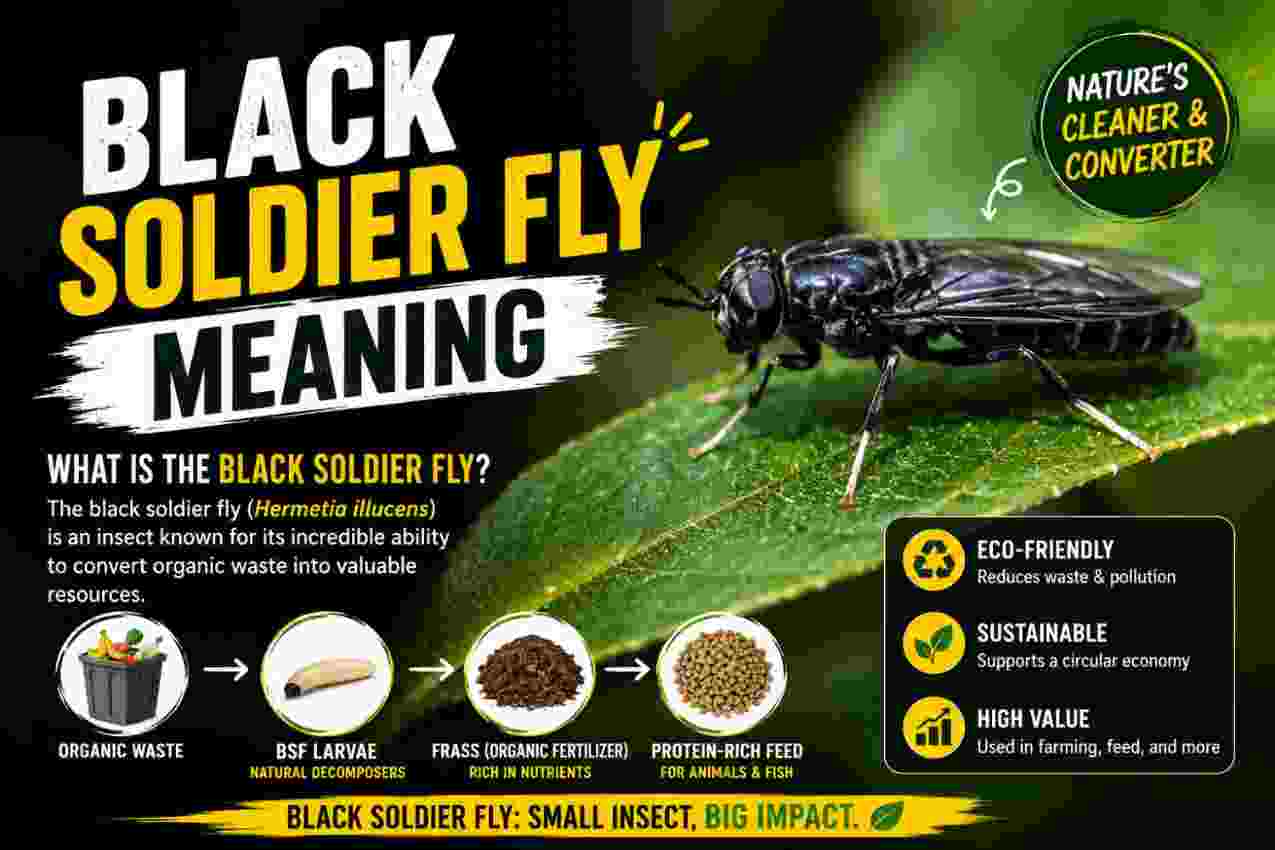
You spotted a strange, dark, wasp-like fly near your compost bin and your first thought was probably “get it away from me.” Here’s the twist: that insect might be the most misunderstood helper in your backyard. Once you understand the real black soldier fly meaning, you’ll never look at your trash can the same way again.
This isn’t your average pest article. We’re breaking down the biology, the symbolism, and the surprising economic value of this creature in plain, human language.
What Is a Black Soldier Fly, Exactly?
The black soldier fly, scientifically known as Hermetia illucens, is a non-biting insect native to the Americas. It looks intimidating because of its slender, dark body and wasp-like appearance, but it carries no stinger and poses zero threat to humans.
Unlike the common housefly, this insect doesn’t spread disease. It doesn’t even have functional mouthparts as an adult, so it can’t bite you even if it wanted to.
Why People Confuse It With Other Insects
Most homeowners mistake it for a wasp or a mud dauber at first glance. The confusion happens because of its narrow waist and long antennae, which trick the eye into assuming danger.
A closer look reveals translucent patches near the base of its abdomen, almost like little windows. That single feature is the easiest way to identify it correctly.
The Real Black Soldier Fly Meaning Beyond Biology
Beyond science class facts, this fly has picked up a symbolic reputation among gardeners, homesteaders, and even spiritual communities. Many people now associate its presence with transformation and renewal.
Here’s why that symbolism actually makes sense:
- The larvae consume decaying waste and turn it into rich, usable material.
- The adult fly emerges only after a dramatic physical transformation.
- Its entire life cycle revolves around turning “waste” into something valuable.
A Symbol of Sustainability
Environmentalists have started treating this insect as a mascot for the circular economy. It eats what we throw away and gives back something we can use, whether that’s compost or animal feed.
That’s a powerful message hiding inside a bug most people want to swat away.
Life Cycle: How This Insect Transforms Trash Into Treasure
Understanding the life cycle helps explain why this insect earned such a strong reputation in sustainable farming circles. The process moves fast and produces almost no smell compared to regular decomposition.
| Life Stage | Duration | What Happens |
|---|---|---|
| Egg | 4 days | Female lays 500+ eggs near decaying organic matter |
| Larva | 2-4 weeks | Voracious eating stage; consumes food waste rapidly |
| Prepupa | 1-2 weeks | Larva turns darker and stops eating |
| Pupa | 1-2 weeks | Transformation inside a hardened shell |
| Adult | 5-8 days | Mates, lays eggs, then dies without eating |
A quick look at this table shows something fascinating. The adult fly barely lives a week and doesn’t even eat during that time, since its entire biological purpose was already fulfilled during the larval stage.
Why the Larval Stage Matters Most
The larvae are the real stars of this story. A single larva can consume twice its body weight in food waste daily, which is why commercial composting operations now farm these insects on purpose.
They process manure, rotting produce, and food scraps faster than almost any other natural method available today.
Black Soldier Fly Larvae: The Hidden Superfood Factory
Farmers and sustainable agriculture experts have turned their attention toward the larvae for one big reason: protein. These grubs contain incredibly high protein and fat content, making them a serious contender in animal feed production.
Where These Larvae Are Actually Used
- Poultry feed: Dried larvae are a high-protein supplement used by chicken growers.
- Fish farming – Aquaculture operations use them to replace expensive fishmeal.
- Pet food industry – Several premium dog and cat food brands now list them as an ingredient.
- Composting systems – Homesteaders use larvae bins to reduce kitchen waste dramatically.
A growing number of startups have built entire businesses around farming these larvae at scale. It’s not a niche hobby anymore; it’s becoming a legitimate agricultural sector.
Is the Black Soldier Fly Dangerous to Humans or Pets?
This is the question everyone actually wants answered. The short version: no, it isn’t dangerous at all.
Adult flies lack the mouthparts needed to bite, and they don’t land on food the way houseflies do. They’re not attracted to human food sources the way typical nuisance pests are.
Signs You’re Dealing With a Harmless Soldier Fly
- Dark, metallic-blue or black body with a wasp-like shape
- Two translucent “windows” near the base of the abdomen
- Slow, non-aggressive flight pattern
- Found near compost, manure, or decaying plant matter
If you see these traits, you can relax. This insect showing up in your yard is actually a sign of a healthy decomposition cycle happening nearby.
How to Attract or Farm Black Soldier Flies at Home
If you’re inspired by the sustainability angle, plenty of people now set up small larvae bins at home. It’s become a popular side project for anyone interested in reducing food waste naturally.
Simple Steps to Start Your Own Bin
- Get a ventilated plastic bin with drainage holes at the bottom.
- Add a mix of food scraps like fruit peels and vegetable ends.
- Place the bin in a warm, shaded outdoor spot to attract wild females.
- Harvest mature larvae after two to three weeks for feed or fishing bait.
- Keep moisture levels balanced to avoid odor buildup.
Within a few weeks, most people notice a dramatic drop in the volume of food waste heading to the trash can.
Frequently Asked Questions
What does seeing a black soldier fly mean spiritually?
Many people interpret it as a sign of transformation, since the insect’s entire life revolves around turning decay into something new and useful.
Do black soldier flies bite or sting?
No, adult black soldier flies have no functional mouthparts, so they physically cannot bite or sting a person or pet.
Are black soldier fly larvae safe to touch?
Yes, the larvae are completely safe to handle with bare hands and are even sold commercially as pet food and fishing bait.
How long does a black soldier fly live as an adult?
The adult stage typically lasts only five to eight days, just long enough to mate and lay eggs before dying naturally.
Can black soldier flies get inside my house and cause damage?
They rarely enter homes since they’re drawn to outdoor decaying matter, and even if one wanders inside, it causes no structural or health damage.
Why do farmers love black soldier fly larvae so much?
Farmers value them because the larvae convert food waste into high-protein feed faster and cheaper than traditional livestock feed sources.
Is farming black soldier flies profitable?
Yes, several commercial operations now sell dried larvae, larvae oil, and frass fertilizer, turning this insect into a genuine revenue stream.
Final Thoughts on the Black Soldier Fly Meaning
Next time one of these dark, wasp-shaped insects lands near your compost pile, resist the urge to panic. This creature represents one of nature’s most efficient recycling systems, quietly working while most people never notice.