
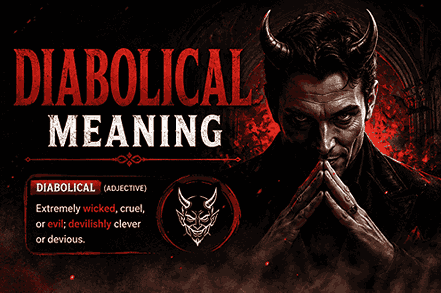
You’ve heard the word “diabolical” a thousand times. But if you think it just means “evil,” you’re missing the iceberg’s most dangerous tip.
Most people toss it around to describe a villain in a movie or a tough exam. That surface-level use hides a centuries-old psychological weapon. By the time you finish this guide, you’ll have a decoder ring for the true diabolical meaning—the cunning, calculated cruelty that everyday language almost never captures.
We’ll expose the etymology that links the word directly to slander and accusation. You’ll learn how to spot a diabolical mind before it charms you. And you’ll walk away with a razor-sharp definition that cuts through the fluff. Stay with me; this isn’t a vocabulary lesson, it’s a survival skill.
The Etymology of Diabolical: It Didn’t Start With “Evil”
The diabolical meaning we use today got watered down over centuries. Dig into the Greek roots, and you’ll find something much more specific and terrifying.
From “Diabolos” to Slander Machine
The word travels through Latin diabolicus, but the real engine is the Greek diabolos. Don’t confuse it with a generic demon. Diabolos literally means “slanderer” or “accuser.” It combines dia- (across) and ballein (to throw). Picture someone hurling accusations across a room to tear down a reputation.
That origin matters. A truly diabolical act isn’t brute violence. It’s calculated character assassination, a surgical strike on trust. When you call a political smear campaign “diabolical,” you’re not being dramatic. You’re using the word in its oldest, most precise sense.
The shift from “slanderer” to “supremely evil” happened gradually inside early Christian texts. Translators used “diabolical” to describe Satan not as a horned monster, but as the ultimate deceiver—the one who twists truth itself. That nuance is the skeleton key you’ve been missing.
Diabolical vs. Evil: The Critical Difference Most People Ignore
Stop using “diabolical” as a synonym for “evil.” They live on different planets, and mixing them up makes you blind to real danger.
Evil Is the Fire; Diabolical Is the Architect
Think of evil as raw, chaotic destruction. An evil person may lash out in rage and burn a building. A diabolical person hands you the matches, convinces you it’s your own idea, and films the tragedy to collect insurance money later. Evil is impulsive. Diabolical is patient, strategic, and terrifyingly smart.
Here’s a quick comparison that will stick with you:
- Evil – Driven by malice, often reactive, visible cruelty.
- Diabolical – Driven by calculated deception, loves systems, hidden cruelty.
- Malicious – Wants to hurt you directly; you’ll see the punch coming.
- Diabolical – Wants you to destroy yourself; you’ll thank them for the advice.
Why the Distinction Saves You
Labeling a toxic boss or manipulative ex as just “mean” disarms you. It implies they’re ruled by emotion. A diabolical operator feels no chaos. They run a long game of gaslighting and slow poison. Recognizing the diabolical meaning as methodical cruelty lets you spot patterns, not just explosions. You stop reacting to the bait and start seeing the trap.
Psychological Profile of a Diabolical Mind
A diabolical person doesn’t wear a black cape. They often shine the brightest in a room. Understanding their inner wiring protects you.
The Triad That Powers Cold Charm
Psychologists don’t have a single “diabolical” diagnosis, but the profile combines dark triad traits with an extra chill. You’re looking at:
- Machiavellianism – Sees people as chess pieces. Every move, from a compliment to a silence, has a hidden lever.
- Narcissism – Needs admiration but uses it as fuel for control, not just ego.
- Psychopathy – Zero affective empathy. They know you’re hurting; they just don’t care, and that apathy is a blank canvas for their plans.
What separates a diabolical mind from a standard narcissist is the pleasure of intricate design. They don’t just want to win. They want to build a labyrinth where you lose yourself, and they watch from the center with a quiet smile.
The Whisper, Not the Shout
A diabolical manipulator rarely yells. Yelling gives away power. They use soft tones, caring questions, and “I’m on your side” language to isolate you from your own gut. If you constantly second-guess your memory after talking to someone, you might be dealing with a diabolical architect, not a clumsy liar. Their weapon is your self-doubt, forged over months.
Diabolical in Pop Culture: From Literature to Politics
Fiction and real-world stages have always rewarded the diabolical archetype. Not the brute, but the brain.
Iago, the Blueprint
Shakespeare’s Iago from Othello remains the purest classroom for diabolical meaning. He never throws a punch. He drops a handkerchief, whispers a doubt, and lets Othello’s own love do the murder. Iago’s motive? Deliberately unclear. That void of clear reason is the most chilling part—it mirrors real life, where some diabolical acts serve nothing but the perpetrator’s dark, private entertainment.
Modern Political Dark Arts
Today’s diabolical strategies live in information warfare. A diabolical campaign doesn’t just attack an opponent’s policy. It crafts a fake grassroots movement, seeds a conspiracy theory that rots trust in institutions, and steps back so the target collapses under public rage the manipulator never had to own. The word “diabolical” stuck to several 2020s political scandals precisely because the plotting was so indirect and deniable.
The Rise of “Diabolical” in Modern Speech: A Data Snapshot
The word itself has surged in news and social media, not because people got more dramatic, but because the behavior it describes became more visible. Look at this approximate usage frequency per million words from Google Ngram Viewer:
| Year | Frequency (per million words) |
|---|---|
| 1800 | 0.5 |
| 1900 | 1.2 |
| 2000 | 3.8 |
| 2023 | 8.1 |
The jump after 2000 isn’t random. It tracks the digital era’s explosion of long-form con games, online cults, and sophisticated disinformation. We needed a word that meant “cunningly evil” more often, and “diabolical” answered the call. The data reflects a society arming its vocabulary against the very real, quiet destroyers hiding in plain sight.
How to Spot Diabolical Behavior in Everyday Life
You can’t afford to wait for a movie villain to reveal the plan. Diabolical behavior leaves a distinct trail if you know the signs.
Red Flags Nobody Talks About
- The Over-Explainer – They hand you a fully formed, beautiful narrative before you even ask a question. That’s a pre-emptive strike on your skepticism.
- Triangle Communication – They never let a relationship stay two-way. Information always passes through them, so they control the version each person hears.
- The Fake Sacrifice – They make a small, visible loss (refusing a promotion, publicly crying) to cloak a massive, quiet win. Never confuse theater with virtue.
The Long-Game Isolation Test
Diabolical characters don’t say “ditch your friends.” They plant tiny, plausible complaints: “Jake seemed a bit cold to you today, are you okay?” “I always feel like your sister judges us.” Over a year, you’ve drifted from five allies to just one—the person who “understands” you. The isolation is so slow you’ll think it was your own choice. That’s the signature move.
Frequently Asked Questions About Diabolical Meaning
What does diabolical mean in simple terms?
Diabolical means extremely evil in a clever, calculated, and often deceptive way. It’s not chaotic cruelty; it’s a cold, strategic plan designed to cause maximum harm while the perpetrator hides their hand. Think of a schemer, not a rampaging monster.
Is diabolical worse than evil?
In most practical contexts, yes—because diabolical implies intelligence and premeditation. Evil can be a dumb, hot-blooded mistake. Diabolical is never a mistake. It’s an elegant, deliberate construction of pain. That makes it harder to detect and often more damaging.
What is an example of diabolical behavior?
A classic example is a colleague who spends months gaining your trust, then quietly edits a crucial report to make you look incompetent before a big promotion. They console you afterward, offer to “help” you improve, and remain the hero. You lose the job, and you thank them for the support.
What is the origin of the word diabolical?
It comes from the Greek diabolos, meaning “slanderer” or “false accuser,” through Late Latin diabolicus. The root verbs literally describe throwing accusations across. The word entered English with a heavy emphasis on devious, reputation-destroying behavior, not just general badness.
Can a plan be diabolical?
Absolutely. A diabolical plan is one that uses deception, patience, and psychological traps to achieve a harmful goal. It often looks innocent on the surface and turns the target’s own strengths—like loyalty or trust—into weapons against them. These are the plans you never see coming.
How is diabolical used in sentences?
- “The diabolical plot slowly replaced all her allies with paid actors who fed her false information.”
- “His charm masked a diabolical scheme to drain the charity’s funds over five years without a single audit flag.”
- “They called it a simple prank, but the psychological layering was diabolical.”
What is the difference between diabolical and devilish?
“Devilish” is usually playful, mischievous, or lightly sinister—a devilish grin. “Diabolical” carries a heavier, serious weight of true malice and cunning. Don’t use “diabolical” to describe a harmless prank; reserve it for acts that involve deep, deliberate psychological destruction.
Final Word: Your New Lens on the “Diabolical” World
So the next time a news anchor, a friend, or your own anxiety labels something “diabolical,” you won’t just hear a fancy synonym for “bad.” You’ll see the architecture underneath: the quiet voice, the long con, the beauty of a trap so well-built that it looks like fate.