
Your home is either too hot, too cold, or costing you a fortune, and the system responsible for all three is one most people never actually understand. That system has a name, and once you know what it means, you start making smarter decisions about your comfort and your wallet.
By the end of this guide, you will know exactly what HVAC stands for, how each piece works together, and which small habits quietly drain hundreds of dollars a year.
What Does HVAC Actually Stand For?
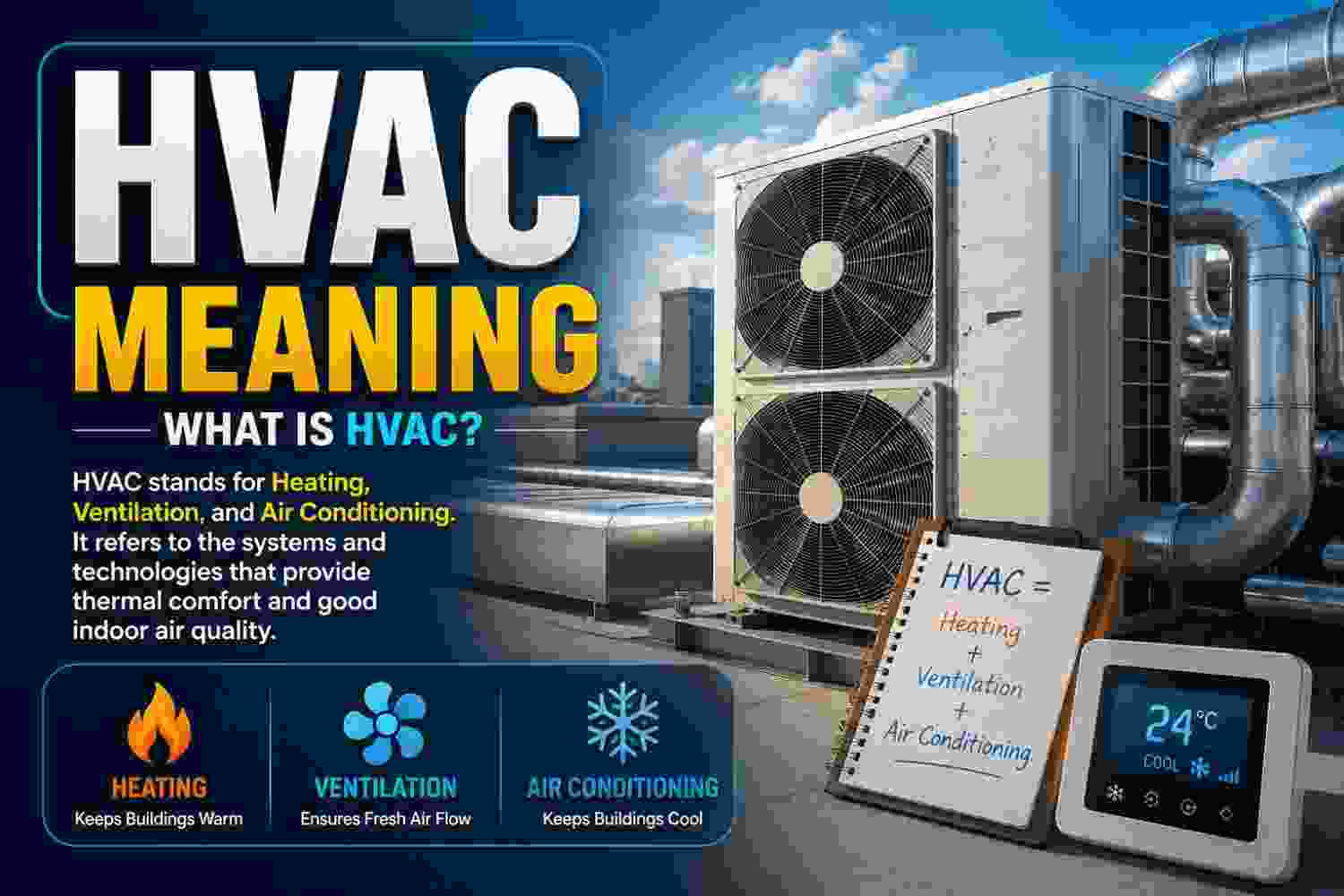
Heating, ventilation, and air conditioning are referred to as HVAC.It describes the combined system responsible for controlling temperature, air movement, and air quality inside any building.
The majority of people only consider HVAC when something goes wrong.. In reality, this system runs almost constantly in the background, adjusting conditions long before discomfort ever sets in.
Understanding hvac meaning matters because these systems represent one of the biggest ongoing expenses in any home or business. A basic grasp of how it works puts you in control instead of leaving you at the mercy of a repair bill.
Breaking Down Each Letter In HVAC
Each part of the acronym plays a distinct role, and skipping any one of them creates real problems.
- Heating — warms indoor air during cold months using furnaces, heat pumps, or boilers
- Ventilation — moves fresh air in and stale air out, keeping indoor air quality safe
- Air Conditioning — removes heat and humidity from indoor air during warmer months
These three functions rarely operate in isolation. Modern systems blend them into a single coordinated unit that adjusts automatically based on the season and the thermostat setting.
Why HVAC Systems Matter More Than Most People Realize
A functioning HVAC system does more than keep a room comfortable. It directly affects health, energy costs, and even the lifespan of the building itself.
Poor ventilation allows moisture, allergens, and pollutants to build up indoors. Over time, that buildup can trigger respiratory issues and accelerate mold growth in walls and ceilings.
The Hidden Cost Of Ignoring HVAC Maintenance
Many homeowners only call a technician once the system fails completely. That approach almost always costs more than routine upkeep would have.
- Dirty filters force the system to work harder, spiking energy bills
- Neglected ductwork leaks conditioned air into attics and crawl spaces
- Unchecked refrigerant levels reduce cooling efficiency by double digits
- Delayed repairs often turn a $200 fix into a $2,000 replacement
Each of these issues develops slowly, which is exactly why they go unnoticed. Small inefficiencies pile up quietly until the monthly utility bill finally forces a closer look.
How An HVAC System Actually Works
At its core, an HVAC system moves air through a building using a coordinated loop of components. Warm or cool air travels through ductwork, gets filtered, and circulates through vents into every room.
The thermostat acts as the command center, telling the system when to heat, cool, or simply circulate air. Sensors constantly monitor temperature and adjust output to match the target setting.
Core Components Found In Most HVAC Systems
- Furnace or heat pump for generating warmth
- Air conditioning unit or condenser for cooling
- Ductwork for distributing air throughout the building
- Air filters for trapping dust, allergens, and debris
- Thermostat for controlling temperature settings
- Ventilation fans and vents for air exchange
- Refrigerant lines that carry heat away from indoor air
Not every building uses all seven components in the same configuration. Smaller homes may rely on simpler ductless systems, while larger commercial spaces often need multiple zoned units working together.
HVAC Energy Usage Statistics Worth Knowing
Numbers make the impact of HVAC systems easier to grasp, especially since energy costs affect nearly every household budget. Here is a quick snapshot of current data.
| Metric | Data Point |
|---|---|
| Share of home energy use from HVAC | Roughly 40-50% of total household energy |
| Average annual HVAC repair cost | Between $150 and $650 per service call |
| Average full system lifespan | 15 to 20 years with proper maintenance |
| Efficiency loss from dirty filters | Up to 15% higher energy consumption |
| Homes with outdated HVAC systems | Nearly 45% of U.S. homes over 10 years old |
That first number tells the real story. When almost half of a home’s energy bill traces back to heating and cooling, even small inefficiencies translate into meaningful yearly costs.
Older systems compound the problem further. A unit installed over a decade ago often runs at a fraction of the efficiency modern models achieve, quietly costing homeowners more every single month.
Types Of HVAC Systems You Should Know
Not every building needs the same setup. Choosing the wrong type wastes money and often fails to solve the actual comfort problem.
Split Systems
This is the most common residential setup, pairing an outdoor condenser with an indoor furnace or air handler. It works well for homes with existing ductwork already in place.
Ductless Mini-Split Systems
These systems skip ductwork entirely, using individual units mounted in specific rooms. They suit older homes, additions, or spaces where installing ducts isn’t practical.
Packaged HVAC Systems
This setup combines heating and cooling components into a single outdoor unit, often used in smaller homes or buildings with limited indoor space. It simplifies installation but can be harder to service.
Selecting the Ideal HVAC System for Your Area
Picking an HVAC system should never start with brand names or flashy features. It should start with the actual size and layout of the space being conditioned.
- Get a proper load calculation before choosing any unit size
- Check the SEER rating to compare real energy efficiency
- Consider your climate zone, since heating needs vary drastically by region
- Ask about warranty coverage, since parts and labor terms differ widely
- Compare installation quotes from at least two licensed contractors
An oversized unit cycles on and off too quickly, wasting energy and wearing out parts faster. An undersized one runs constantly and still struggles to keep up, so getting the sizing right matters more than most buyers expect.
Simple HVAC Maintenance Habits That Save Money
Routine care extends the life of any HVAC system dramatically. Most of these habits take minutes and cost far less than emergency repairs.
- Replace air filters every one to three months
- Keep outdoor units clear of leaves, debris, and overgrown plants
- Schedule professional tune-ups twice a year, ideally before each season
- Seal visible duct leaks to prevent conditioned air from escaping
- Keep vents unblocked by furniture or curtains for proper airflow
Skipping these small tasks is exactly how a $150 repair eventually becomes a $5,000 replacement. Consistency matters far more than any single expensive upgrade.
Frequently Asked Questions
What does HVAC mean in simple terms?
HVAC means Heating, Ventilation, and Air Conditioning. It refers to the complete system that controls indoor temperature, air movement, and air quality in a home or building.
How often should HVAC filters be changed?
Most filters need replacement every one to three months, though homes with pets or allergy concerns often benefit from monthly changes.
How long does an HVAC system typically last?
A well-maintained system usually lasts 15 to 20 years, while neglected units often fail well before the 10-year mark.
What is the difference between HVAC and just air conditioning?
Air conditioning only handles cooling, while HVAC covers heating, ventilation, and cooling together as one integrated system.
Can a bad HVAC system affect indoor air quality?
Yes, poor ventilation and dirty filters allow dust, allergens, and moisture to build up, which can worsen allergies and encourage mold growth.
How much does HVAC repair usually cost?
Most repair calls range between $150 and $650, though major component failures like a compressor can push costs significantly higher.
Do I need a professional to maintain my HVAC system?
Basic tasks like filter changes are fine to handle yourself, but refrigerant checks, electrical work, and full tune-ups should always go through a licensed technician.
Final Verdict
HVAC meaning comes down to one simple idea: comfort and air quality never happen by accident. Every component, from the thermostat to the ductwork, exists to keep your indoor environment steady no matter what’s happening outside.
If your system hasn’t had a tune-up in over a year, that gap is likely already costing you money on every single utility bill. The smartest homeowners heading into 2026 treat HVAC upkeep as routine, not optional, and their energy bills prove it every month.