
Picture a delivery truck sitting idle for two extra hours because nobody told the driver where to go next. That silent gap between “order placed” and “order moving” is exactly what dispatching exists to close.
Once you understand what dispatching means, you’ll see it hiding behind every fast delivery, every on-time repair visit, and every taxi that shows up right when you need it. This guide breaks the term down in plain language, no jargon required.
By the time you finish reading, you’ll know exactly how dispatching works, why businesses can’t survive without it, and how to spot a dispatching system that’s actually doing its job.
What Does Dispatching Actually Mean?
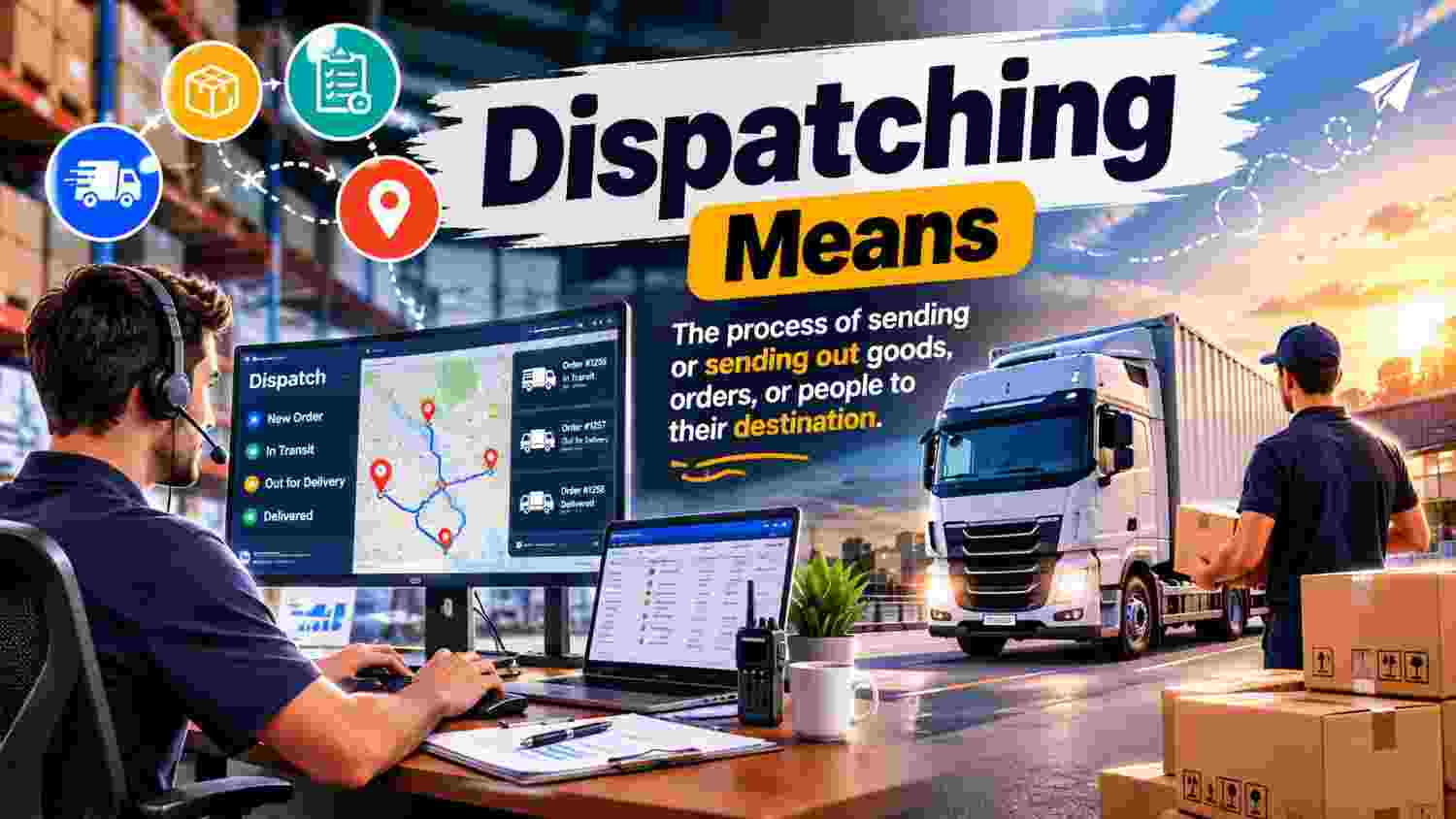
Dispatching means the process of assigning tasks, vehicles, or personnel to specific jobs and directing them to where they need to go. It’s the coordination layer that sits between a customer request and the person who fulfills it.
Think of a dispatcher as an air traffic controller for trucks, technicians, or drivers. Nobody moves without a clear signal telling them what to do and where to head next.
The term shows up constantly across trucking, ride-hailing, emergency services, and field repair companies. Each industry uses it slightly differently, but the core idea stays identical everywhere.
The Three Core Elements Hidden Inside Dispatching Means
Strip the concept down and dispatching always involves three moving pieces working together.
- The request — a customer order, service call, or delivery that needs fulfillment
- The resource — a driver, vehicle, technician, or crew capable of handling it
- The instruction — the actual assignment telling that resource what to do and when
Remove any one piece and the whole system breaks down instantly. A truck without instructions just sits in a parking lot burning fuel for nothing.
Why Dispatching Matters More Than Most People Realize
Here’s an uncomfortable truth: companies rarely lose money because they lack drivers or trucks. They lose money because those drivers and trucks sit around waiting for direction.
Good dispatching eliminates that waiting. It matches the right resource to the right job at the right moment, which directly affects how much a company can deliver in a single day.
Customer experience depends on it too. A late repair technician or a delayed delivery almost always traces back to a dispatching decision made hours earlier.
Real Problems That Poor Dispatching Creates
- Drivers sitting idle while nearby jobs go unassigned
- Overlapping routes that waste fuel and time
- Customers left waiting with no accurate arrival estimate
- Emergency response delays caused by unclear assignments
- Burned-out staff handling uneven workloads across a shift
Each problem looks small in isolation. Stacked together across a month, they quietly drain profit and customer trust at the same time.
How Dispatching Works Step By Step
Every dispatching process follows a similar rhythm, whether it’s running a fleet of delivery trucks or a team of plumbers. Understanding these steps makes the whole concept click.
Step 1: The Job Comes In
A customer places an order, calls for service, or requests a pickup. This request lands in a system, whether that’s software, a radio call, or a simple phone line.
Step 2: The Dispatcher Evaluates Resources
The dispatcher checks who’s available, where they currently are, and how qualified they are for the job. Location and timing usually matter just as much as skill level here.
Step 3: Assignment And Communication
The dispatcher assigns the task and sends clear instructions to the chosen driver or worker. Modern systems handle this through apps and GPS-linked messages instead of paper logs.
Step 4: Tracking And Adjustment
Once the job is underway, dispatching doesn’t stop. Traffic, weather, or new urgent requests can force a dispatcher to reroute someone mid-shift.
Types Of Dispatching You’ll Encounter
Not every industry dispatches the same way. Knowing the differences helps explain why the term feels flexible depending on context.
Manual Dispatching
This older method relies on phone calls, radios, and human judgment alone. Small businesses with a handful of vehicles still use this approach successfully.
Automated Dispatching
Software automatically matches jobs to available resources using algorithms, GPS data, and real-time availability. Ride-share apps rely almost entirely on this model.
Hybrid Dispatching
Many mid-sized companies blend both approaches, letting software suggest assignments while a human dispatcher makes the final call. This balance often produces the best results for complex operations.
Dispatching Statistics Worth Knowing
Numbers make the value of dispatching much easier to grasp. Here’s a quick snapshot relevant to logistics and fleet operations heading into 2026.
| Metric | Data Point |
|---|---|
| Average fuel savings from optimized dispatching | Up to 15% per fleet annually |
| On-time delivery improvement with automated systems | Around 20-25% increase |
| Idle vehicle time reduction | Roughly 30% with real-time tracking |
| Businesses using dispatch software | Over 70% of mid-to-large fleets |
| Average dispatcher-to-driver ratio | 1 dispatcher per 15-25 drivers |
These numbers point to one clear pattern: efficient dispatching isn’t a minor operational detail. It directly shapes fuel costs, delivery speed, and how many jobs a team can realistically complete in a day.
Smaller operations sometimes assume automated dispatching is out of their budget range. The data suggests otherwise, since even modest software investments tend to pay for themselves through reduced idle time alone.
Industries That Depend Heavily On Dispatching
Some sectors simply can’t function without a strong dispatching backbone. A few stand out as especially reliant on getting this process right.
- Trucking and freight — coordinating loads across long-haul and regional routes
- Ride-hailing and taxis — matching passengers to nearby available drivers
- Emergency services — sending police, fire, or medical teams to urgent calls
- Field service companies — scheduling technicians for repairs and installations
- Courier and delivery services — managing last-mile drop-offs efficiently
Each of these industries treats dispatching as a core operational function, not an afterthought. Companies that under-invest here typically fall behind competitors within a year or two.
Choosing The Right Dispatching Approach For Your Business
Picking a dispatching method should start with your actual pain point, not the flashiest software demo available. A three-truck landscaping company doesn’t need the same system as a national freight carrier.
- Identify your biggest bottleneck before evaluating any tool
- Check GPS and real-time tracking capabilities if routes change often
- Look for mobile-friendly driver apps, since most workers operate from phones
- Ask about scalability if you expect to grow your fleet soon
- Compare pricing against your current inefficiency costs, not just the sticker price
A dispatching system that looks powerful but confuses your team will get ignored within weeks. Simplicity paired with genuine time savings beats a feature-heavy platform every time.
Frequently Asked Questions
What does dispatching mean in simple terms?
Dispatching means assigning and directing workers, vehicles, or resources to specific tasks or locations, making sure the right person handles the right job at the right time.
Is dispatching only used in trucking?
No, dispatching applies to any industry that coordinates movement or scheduling, including ride-hailing, emergency response, courier services, and field repair teams.
What’s the difference between dispatching and scheduling?
Scheduling plans work in advance, while dispatching handles real-time assignment and direction once a job is ready to move.
Do small businesses need dispatch software?
Not always, but even small fleets often benefit from basic automated tools since manual dispatching becomes harder to manage as the team grows.
What skills does a good dispatcher need?
Strong dispatchers need clear communication, quick decision-making under pressure, geographic awareness, and comfort working with tracking software or radios.
Can dispatching reduce fuel costs?
Yes, efficient dispatching cuts unnecessary mileage and idle time significantly, often producing noticeable fuel savings within the first few months of optimization.
How has technology changed dispatching?
GPS tracking, mobile apps, and automated algorithms have replaced much of the manual radio and phone-call coordination that dispatching once relied on entirely.
Final Verdict
Dispatching means far more than telling a driver where to go. It’s the invisible coordination system keeping deliveries on time, technicians on schedule, and emergency responders moving fast when it matters most.
If your team still relies on scattered phone calls and guesswork, that inefficiency is costing you money right now, even if nobody has connected the dots yet. The businesses pulling ahead in 2026 treat dispatching as a genuine strategic advantage, not a background task.