
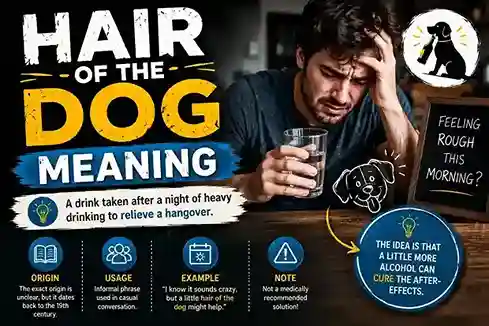
You pry open your eyes, head pounding, stomach lurching. A well-meaning friend slides a drink across the table and mutters, “Hair of the dog.” You freeze. Is this a bizarre pet-grooming reference, or is there a deeper hair-of-the-dog meaning hidden in that glass? The suggestion feels like tempting fate—and it is. Misunderstanding this folk remedy can prolong misery or even nudge you toward risky drinking patterns. This pillar guide decodes the real hair-of-the-dog meaning, its surprising backstory, the science that debunks it, and what to do instead.
Definition and Origin of the Phrase “Hair of the Dog”
The hair-of-the-dog meaning pivots on a single, strange idea: treat a poison with a smaller dose of that same poison. In plain terms, it means consuming more alcohol to relieve a hangover. The complete saying is “the hair of the dog that bit you.” Originally, it had nothing to do with Bloody Marys or morning beers. People once believed that placing a hair from the dog that bit you into the wound would prevent rabies. This medical folk belief dates back centuries and slowly shifted from literal canine hairs to the figurative “bite” of alcohol.
Where Did the Saying Come From? Tracing the Medieval Roots
The Oxford English Dictionary records the first written appearance of the phrase in 1546, inside John Heywood’s proverb collection. The remedy for any poisonous bite back then was “the hair of the dog that bit us.”By the 1600s, drinking a small amount of alcohol to soothe a hangover began co-opting the expression. A person stung by overindulgence would “take a hair of the same dog” the next morning. This linguistic twist turned the hair-of-the-dog meaning into a darkly humorous way to rationalize morning drinking.
How “Hair of the Dog” Became a Hangover Remedy
Drunkenness was treated as a form of poisoning. Healers applied sympathetic logic: what caused the sickness could also cure it, if administered in tiny, controlled doses. In taverns of 18th-century Britain, bartenders served “corpse revivers” — stiff drinks designed to jolt a hungover patron back to life. The hair-of-the-dog meaning soon fused with these practices. By the 20th century, cocktails like the Bloody Mary and the Mimosa became socially acceptable morning alcohol, cementing the phrase in modern bar culture. The historical shift from rabies remedy to hangover myth shows how language evolves around shared human suffering.
The Science Behind the Hair of the Dog Method: Temporary Relief or Dangerous Myth?
Alcohol metabolism creates acetaldehyde, a toxic compound far more damaging than ethanol itself. Your liver breaks ethanol down into acetaldehyde, then into harmless acetate. A hangover peaks when ethanol vanishes and acetaldehyde lingers. The hair-of-the-dog meaning hides a pharmacological trick: drinking more alcohol pauses this breakdown. Your body prioritises fresh ethanol, so acetaldehyde processing stalls. The pain fades for an hour or two. But you haven’t escaped the hangover—you’ve simply hit the snooze button. Once the new alcohol wears off, the backlog of toxins slams back, often harder.
Does Hair of the Dog Actually Work? What Research Reveals
No large-scale study validates the hair-of-the-dog meaning as a genuine cure. The National Institute on Alcohol Abuse and Alcoholism states clearly that time is the only true remedy for alcohol’s toxic effects. Research in the Journal of Clinical Medicine shows that while a small number of people report temporary symptom relief, they rate their overall hangover severity as worse when the second drinking episode ends. The pattern mirrors mild alcohol withdrawal. The brief relief you feel is your brain mistaking the reintroduction of a depressant for healing—a dangerous signal that can reinforce unhealthy habits.
The Risks of Using Alcohol to Cure a Hangover
Chasing the hair-of-the-dog meaning into action carries real health risks. Repeated morning drinking can spiral into a cycle that increases alcohol tolerance and dependence. Mayo Clinic experts caution that using alcohol to self-medicate withdrawal-like symptoms may signal alcohol use disorder. Dehydration deepens because alcohol is a diuretic. Your stomach lining, already inflamed, gets hit with more irritation. Mixing pain relievers like acetaminophen with alcohol while trying a “cure” taxes the liver dangerously. Understanding the hair-of-the-dog meaning is vital precisely because the stakes are higher than a simple headache.
Hair of the Dog Cocktail: The Classic Drink Recipe and Its Variations
The most famous hair-of-the-dog cocktail is the Bloody Mary. Vodka, tomato juice, Worcestershire sauce, lemon, and spices create a savoury punch that also delivers fluids and electrolytes. The Mimosa—champagne and orange juice—adds a burst of vitamin C. A classic Prairie Oyster combines raw egg, brandy, and hot sauce. Even a straightforward beer at brunch embodies the hair-of-the-dog meaning. Each drink tries to mask the alcohol hit with nutrients or strong flavours. Yet no cocktail undoes the metabolic backlog; it simply delays the crash while giving a fleeting sense of recovery.
Why Your Body Rejects the Hair of the Dog Logic
Your organs read the hair-of-the-dog meaning as a second invasion. The liver, already overworked, suddenly faces fresh ethanol. Inflammatory cytokines released during alcohol breakdown intensify, damaging tissue. Your sleep architecture was trashed the night before; a morning drink further fragments restorative sleep. Gastric acid production spikes, worsening nausea. The hair-of-the-dog meaning seems logical only in the fog of a hangover because alcohol numbs the brain’s interpretation of pain. The body, however, keeps score—and it never accepts a poison as a cure.
Hair of the Dog Meaning: Myth vs. Reality
| Myth | Fact | Why It Matters |
|---|---|---|
| More alcohol cures a hangover. | It only delays symptoms by temporarily raising blood alcohol concentration. | Delaying recovery can worsen dehydration and extend suffering. |
| The phrase originally described a hangover cure. | It came from a medieval rabies treatment using actual dog hair. | Knowing the origin explains the bizarre logic. |
| A Bloody Mary is the only hair-of-the-dog drink. | Any alcoholic drink consumed the morning after fits the definition. | Mixed-drink additives can further upset the stomach. |
| The hair-of-the-dog method is harmless. | Regular use can indicate early alcohol dependence. | Recognising risk helps prevent a harmful cycle. |
Safer and More Effective Hangover Recovery Strategies
Forget the hair-of-the-dog meaning when you need genuine relief. Start with water and electrolyte-rich fluids like coconut water or oral rehydration solutions. A light meal of complex carbohydrates stabilises blood sugar. Mayo Clinic experts recommend ibuprofen (with food) rather than acetaminophen if you need pain relief, because acetaminophen stresses a recovering liver. Sleep gives your brain time to clear metabolic waste. A brisk walk speeds circulation, but intense exercise stresses a dehydrated body. Ginger or peppermint tea calms nausea better than another round of poison. The fastest path to feeling human again runs in the opposite direction from the hair-of-the-dog meaning.
Common Misconceptions About the Hair of the Dog Meaning
Many believe the hair-of-the-dog meaning implies a medical endorsement from old-world doctors. In truth, physicians of the past often warned against it. Others assume a hangover is simply dehydration, so a beer with high water content fixes it. While beer does contain water, its alcohol content compounds dehydration. Some people think darker liquors are safer “hair of the dog” choices. In reality, dark spirits contain more congeners—toxic byproducts that worsen hangovers. Finally, the idea that “it works for me” often ignores that partial sleep, food, and hydration during the morning confuse the results.
Cultural Impact: How Movies, Music, and Bars Popularized the Phrase
The hair-of-the-dog meaning entrenched itself in pop culture through music and film. The rock band Nazareth released an album titled Hair of the Dog in 1975, with a hit song that solidified the phrase in the rock-and-roll lexicon. Bars named “Hair of the Dog” dot cities from Portland to London, branding themselves as the go-to spot for weekend recovery brunches. Films like The Hangover joke about morning-after drinking, normalising the concept. This cultural embrace masks the hair-of-the-dog meaning behind humour and camaraderie, making it appear harmless fun rather than a risky habit.
When to Avoid Hair of the Dog Completely: Medical Warnings
If you take prescription medications, especially antidepressants, sedatives, or painkillers, mixing them with a morning drink can be dangerous. Anyone with a history of alcohol use disorder should treat the hair-of-the-dog meaning as a red flag, not a joke. Liver conditions, pancreatitis, and gastric ulcers all scream “no.” Pregnant individuals or those trying to conceive must avoid any alcohol. If your hangover includes vomiting, confusion, or severe abdominal pain, seek medical help instead of pouring a glass. No folk remedy outweighs the value of professional care.
Frequently Asked Questions About Hair of the Dog Meaning
Is the hair-of-the-dog meaning only about hangovers?
No. The hair-of-the-dog meaning first applied to treating rabies by placing a dog’s hair on the wound. The hangover usage came later as a metaphor for “like cures like.”
Does drinking more alcohol really stop a hangover?
It doesn’t stop the hangover; it postpones the worst symptoms. Once the new alcohol wears off, the underlying toxicity returns, often amplified by accumulated dehydration.
What is the most popular hair-of-the-dog cocktail?
The Bloody Mary leads the pack. Its combination of vodka, tomato juice, and spices delivers some fluids and electrolytes alongside the alcohol, creating the illusion of a restorative drink.
Why does hair of the dog make you feel better temporarily?
Alcohol masks the body’s mild withdrawal response by re-depressing the central nervous system. The brain interprets the temporary numbing as relief, even though the root metabolic problem remains unsolved.
Can the hair-of-the-dog method lead to alcohol dependence?
Yes. Using alcohol to relieve hangover symptoms can condition the brain to seek alcohol as a remedy, reinforcing a cycle that increases tolerance and risks escalating to alcohol use disorder.
What should you do instead of relying on hair of the dog?
Hydrate with water and electrolytes, eat a balanced meal, take an over-the-counter anti-inflammatory (avoiding acetaminophen), and let time and rest do the real healing. Ginger tea and gentle movement also help.
Own Your Mornings—Skip the Dog Hair
The hair-of-the-dog meaning unravels as soon as you examine it closely. What began as a medieval superstition about rabies became a cultural alibi for morning drinking. Science refuses to endorse it, your liver rejects it, and your long-term wellbeing demands something better. Next time that pounding head tempts you to reach for a glass, remember: you’re not curing anything—you’re just buying a ticket for a rougher landing. Choose water, rest, and real nourishment instead. If this guide gave you clarity, share it with someone who still believes the myth. Together, we can rewrite the morning-after script.