
Written by a Philippine education content team with direct research into DepEd policy documents, Republic Act 11510, and official government sources. Last reviewed: July 2026.
You dropped out of school years ago. Maybe work got in the way, or money ran out, or life simply pulled you somewhere else. Now that missing diploma blocks job offers, promotions, and even simple government paperwork. The alternative learning system meaning covers exactly this gap — it is the legal, government-backed path that lets you finish basic education outside a traditional classroom and move forward without shame or delay.
This guide breaks down what the alternative learning system actually means, who it serves, and how to start today.
What Is the Alternative Learning System? (Full Meaning Explained)
The alternative learning system, known widely by its acronym ALS, is a free, government-run education program in the Philippines. The Department of Education manages it as a parallel track to formal schooling.
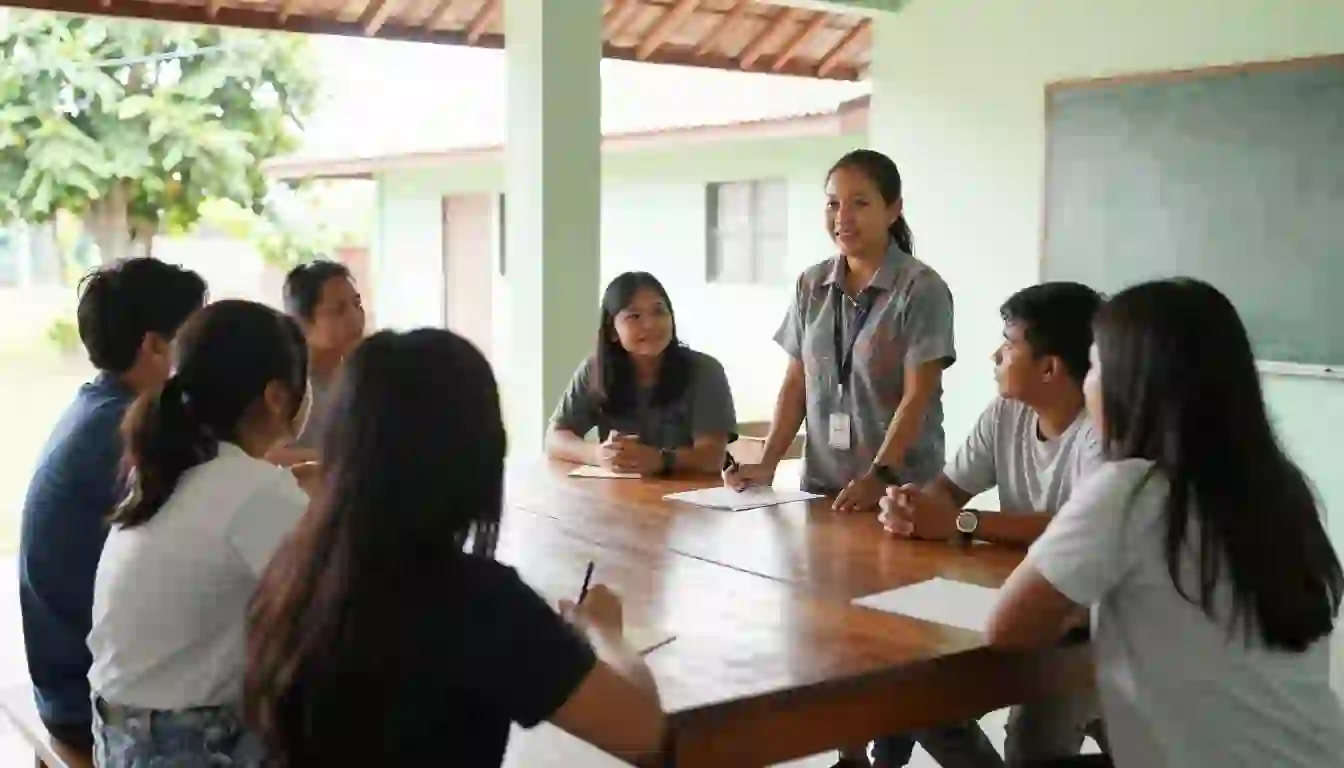
Unlike a regular school, ALS does not require a fixed classroom, a daily schedule, or a school uniform. Learners study through modules, community sessions, and guided self-paced lessons instead.
The alternative learning system meaning rests on three pillars:
- Flexibility — learners set their own pace and location.
- Accessibility — sessions happen in barangay halls, libraries, or homes.
- Equivalency — graduates earn a certificate recognized as equal to a formal diploma.
DepEd built this system for one clear purpose: no Filipino should lose access to education because of age, distance, income, or circumstance.
A Brief History of ALS in the Philippines
The Philippine Constitution of 1987 first opened the door for education outside the traditional classroom. Article XIV directs the State to support learning systems beyond formal school, including self-study and community-based programs.
DepEd formally launched the alternative learning system in 1997 as a direct response to rising numbers of out-of-school children and adults. Republic Act 9155, the Governance Act for Basic Education, later gave DepEd a clear mandate to run non-formal and informal education nationwide.
The program gained even stronger legal footing on December 23, 2020, when President Rodrigo Duterte signed Republic Act 11510, the Alternative Learning System Act. This law created the Bureau of Alternative Education (BAE), a dedicated office that now oversees every ALS program across the country.
That legislative history matters. It proves the alternative learning system is not an informal workaround — it is a protected, funded, and legally mandated right.
Who Can Enroll in ALS?
ALS targets a specific group DepEd calls Out-of-School Children, Youth, and Adults, or OSCYA. You likely qualify if you fall into one of these categories:
- Elementary or high school dropouts, at any age
- Working adults who never finished basic education
- Persons with disabilities who need flexible learning arrangements
- Indigenous peoples in far-flung or remote communities
- Adult non-readers who never had access to formal schooling
- Senior citizens who want to complete their education
- Out-of-school youth aged 15 and above without a diploma
There is no age ceiling. A 19-year-old and a 60-year-old can sit in the same ALS session and both walk away with a recognized certificate.
Alternative Learning System vs. Formal Education: Key Differences
People often confuse ALS with homeschooling or online school. It shares traits with both, yet it stands as its own distinct entity within Philippine education law.
| Feature | Formal Education | Alternative Learning System |
|---|---|---|
| Setting | Classroom-based | Community centers, homes, barangay halls |
| Facilitator | Licensed classroom teacher | Mobile teacher or ALS instructional manager |
| Schedule | Fixed school hours | Flexible, agreed between learner and facilitator |
| Entry age | Age-specific grade levels | Open to any age, 15 years old and above for most tracks |
| Assessment | Quarterly exams, report cards | Accreditation and Equivalency (A&E) test |
| Cost | Free in public schools | Completely free under DepEd |
| Output | Elementary or high school diploma | Certificate of Completion, equivalent to formal diploma |
Both systems lead to a recognized credential. The path simply differs.
The Two Major Programs Under ALS
DepEd runs ALS through two core programs, both managed by the Bureau of Alternative Education.
1. Basic Literacy Program (BLP) This program targets non-readers and non-writers of any age. It builds foundational literacy and numeracy skills before a learner moves into higher-level modules.
2. Continuing Education Program – Accreditation and Equivalency (A&E) This program serves learners who already read and write but never completed elementary or secondary school. It prepares them directly for the A&E assessment, which grants formal equivalency.
Both programs use printed modules, group discussions, and one-on-one coaching from trained facilitators.
ALS Curriculum: What Learners Actually Study
The ALS curriculum organizes lessons into five learning strands rather than traditional subjects:
- Communication skills (English and Filipino)
- Scientific and critical thinking skills
- Mathematical and problem-solving skills
- Life and career skills
- Understanding oneself and society
Each strand blends practical, real-world tasks with academic content. A learner might calculate a market budget in one module and analyze a community issue in the next. This design keeps lessons relevant to daily life, not just exam preparation.
How the ALS Accreditation and Equivalency (A&E) Test Works
The A&E test is the official checkpoint that confirms a learner’s readiness to receive an equivalency certificate. DepEd offers two levels:
- Elementary Level A&E Test — for learners completing the elementary equivalent
- Secondary Level A&E Test — for learners completing the high school equivalent
The test covers the same five learning strands taught throughout the program. Passers receive a Certificate of Completion, which DepEd, colleges, and employers treat as equal to a formal diploma.
Registration happens through the nearest DepEd Schools Division Office, and the test itself is free for all qualified learners.
Benefits of Joining ALS
Finishing school through ALS opens doors that stay closed without a diploma.
- College access — A&E passers can enroll in most colleges and universities.
- Job qualification — many employers require at least a high school equivalency.
- Government scholarships — completion opens access to programs under RA 10931, the Free Tuition Law.
- Skills training — TESDA often pairs with ALS graduates for technical-vocational scholarships.
- Confidence and dignity — learners regain a credential that society respects.
- Community impact — literate parents raise more literate children.
The alternative learning system does more than hand out a certificate. It restores momentum to a life that formal school once left behind.
Common Challenges Learners Face in ALS
Honest guidance means naming the obstacles too.
- Limited facilitators — some regions have too few mobile teachers for the number of learners.
- Balancing work and study — many ALS learners hold full-time jobs.
- Connectivity gaps — remote areas struggle with digital modules that require internet access.
- Social stigma — some learners still feel embarrassed about returning to basic education later in life.
- Test anxiety — the A&E test carries real weight, and first-time takers often feel pressure.
DepEd continues to expand facilitator training and community learning centers to close these gaps year over year.
How to Enroll in ALS (Step-by-Step)
Enrollment takes fewer steps than most people expect.
- Visit your barangay hall or nearest community learning center. Ask for the ALS coordinator or mobile teacher.
- Bring valid identification. A birth certificate or any government ID speeds up registration.
- Take the initial assessment. DepEd uses this to place you in the correct learning level.
- Attend scheduled sessions. Facilitators agree on times that work around your job or family duties.
- Complete your modules. Work through the five learning strands at your own pace.
- Register for the A&E test. Your facilitator will guide you through the DepEd Schools Division Office process.
- Receive your certificate. Passing the A&E test grants your equivalency credential.
The entire process costs nothing. DepEd funds every stage of ALS through public education budgets.
ALS Success Stories and Career Outcomes
Thousands of ALS graduates now work as call center agents, small business owners, government employees, and college graduates. Many credit the program for giving them a second entry point after years away from school.
Local government units and NGOs frequently document these outcomes through DepEd’s ALS 2.0 initiative, a partnership that also tracks learner progress through DepEd’s Learner Information System. That data collection helps the Bureau of Alternative Education refine modules and reach more remote communities each year.
ALS vs Online Learning vs Homeschooling
These three terms overlap but are not identical.
- ALS — a free, DepEd-run program with certified facilitators and a government-recognized equivalency test.
- Online Learning — any internet-based instruction, which may or may not connect to an accredited institution.
- Homeschooling — parent-led or tutor-led instruction, often tied to a private curriculum provider and tuition fees.
ALS stands apart because it is fully free, government-certified, and open to any age group without requiring a parent-instructor.
Quick Reference Table: Alternative Learning System at a Glance
| Question | Answer |
|---|---|
| What does ALS stand for? | Alternative Learning System |
| Who manages it? | Department of Education, through the Bureau of Alternative Education |
| What law protects it? | Republic Act 11510, the Alternative Learning System Act |
| Who can enroll? | Out-of-school children, youth, and adults, generally 15 years old and above |
| What does it cost? | Free |
| What credential do graduates receive? | Certificate of Completion, equivalent to a formal diploma |
| How is progress measured? | Accreditation and Equivalency (A&E) test |
| Where does learning happen? | Community learning centers, barangay halls, libraries, or homes |
Frequently Asked Questions
What does alternative learning system mean in simple terms?
It means a free, government-run program that lets Filipinos finish basic education outside a regular classroom, at their own pace, with a certificate equal to a diploma.
Who is eligible for ALS?
Out-of-school children, youth, and adults who have not completed elementary or high school qualify, with most learners aged 15 and above.
Is ALS recognized by DepEd?
Yes. DepEd created and fully manages ALS through the Bureau of Alternative Education, and Republic Act 11510 gives it permanent legal status.
How long does it take to finish the Alternative Learning System?
Completion time varies by learner pace, but most students finish within six months to two years, depending on their starting literacy level.
Can ALS graduates go to college?
Yes. Passing the Accreditation and Equivalency test grants a certificate that colleges and universities accept the same way they accept a formal high school diploma.
Is the Alternative Learning System free?
Yes. Every stage, from modules to the A&E test, comes at no cost to the learner.
Take the Next Step Today
A missing diploma should never decide your future. The alternative learning system gives you a real, funded, government-backed path back into education — no tuition, no age limit, no judgment. Walk into your nearest barangay hall or community learning center this week, ask for the ALS coordinator, and start the enrollment process. Your certificate, your next job, and your next chapter are closer than you think.
Trust & Sources
This article draws on primary government and institutional sources, not secondhand blogs:
- Department of Education, Philippines — About Alternative Learning System: https://www.deped.gov.ph/k-to-12/inclusive-education/about-alternative-learning-system/
- Official Gazette / Republic Act No. 11510, the Alternative Learning System Act (signed December 23, 2020)
- UNICEF Philippines — DepEd, UNICEF strengthen Alternative Learning System toward quality, relevant second chance basic education: https://www.unicef.org/philippines/press-releases/deped-unicef-strengthen-alternative-learning-system-toward-quality-relevant-second